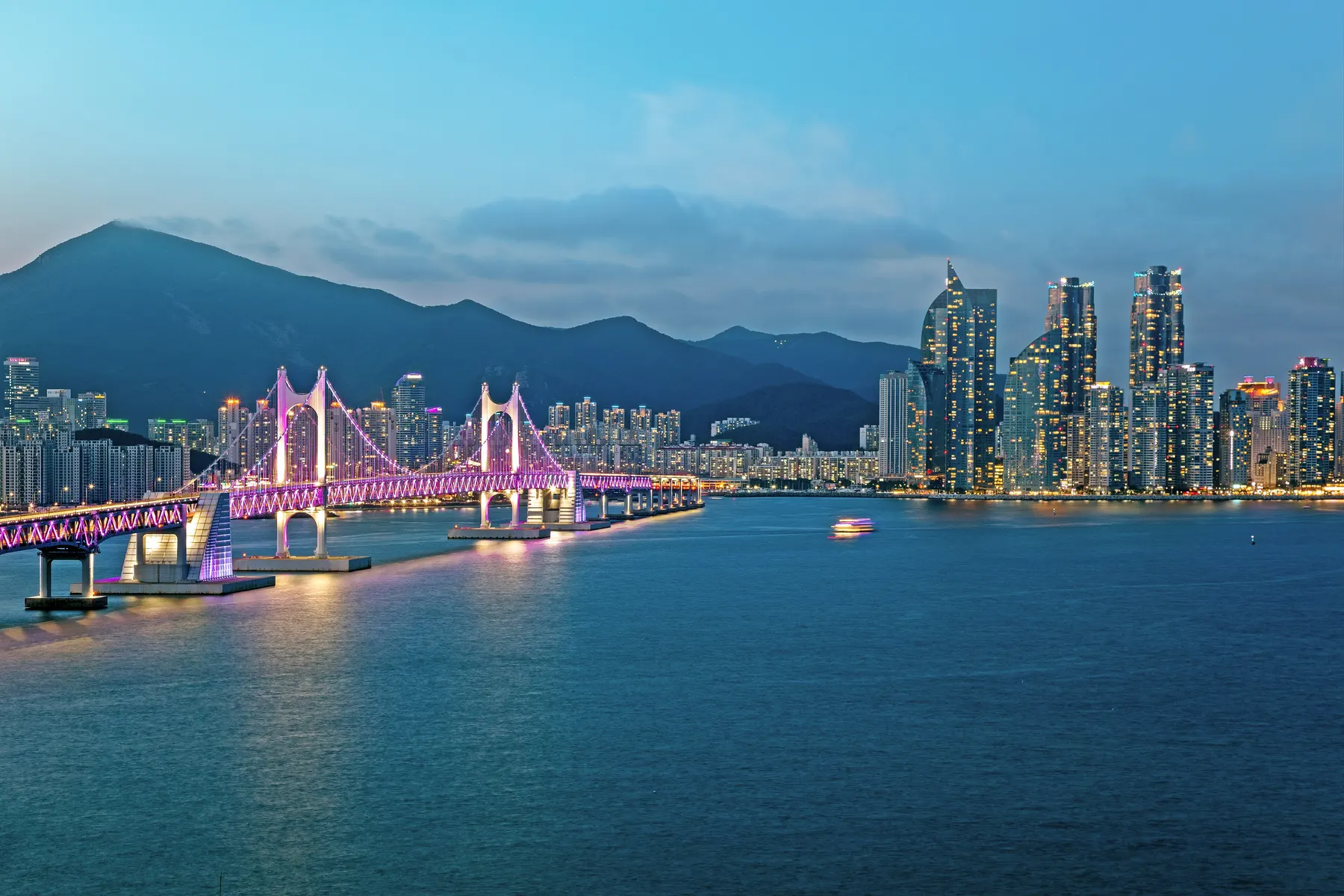
BUSAN · SEA
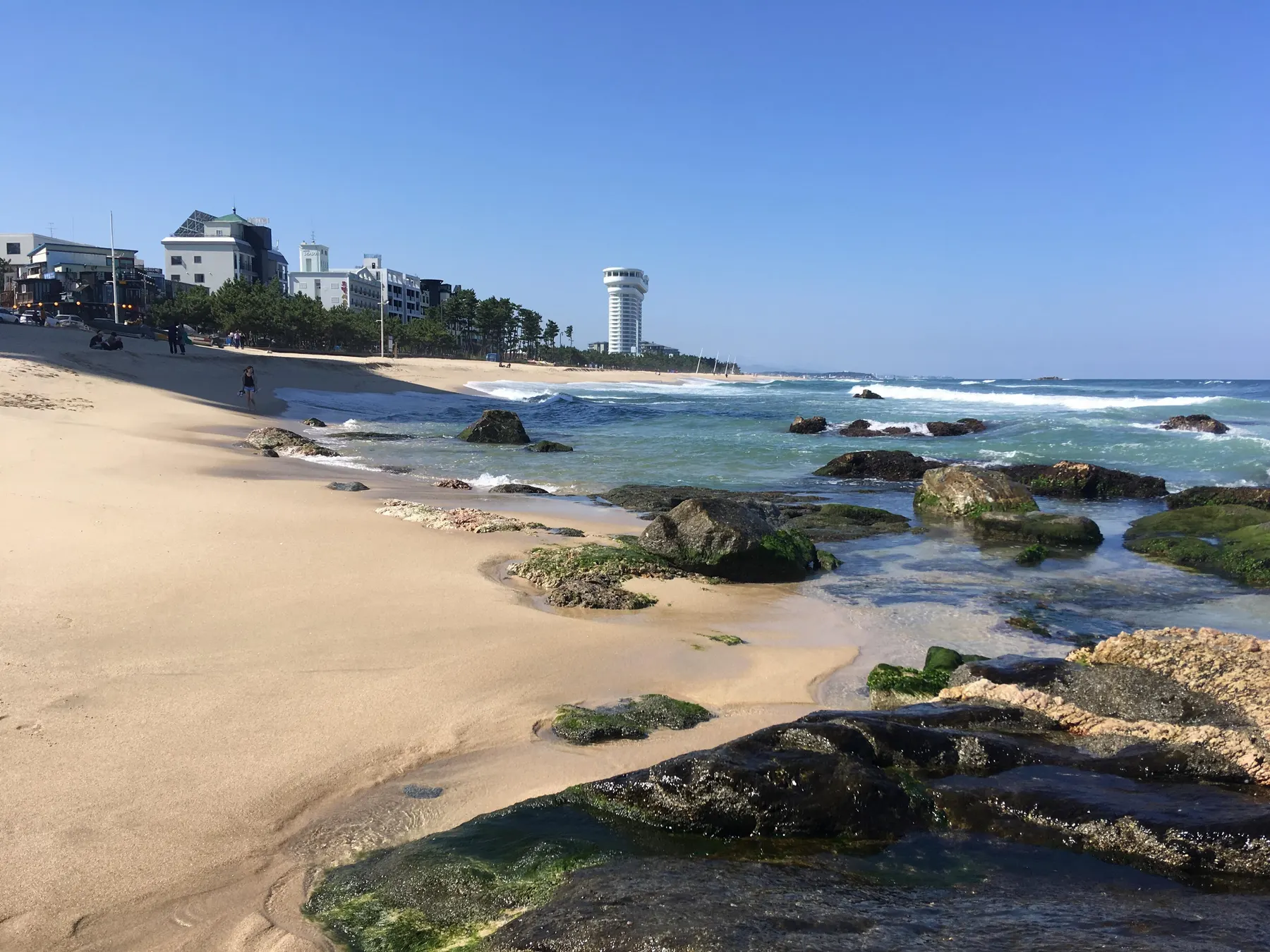
For cinema, beaches and nights that last longer. Eat: dwaeji-gukbap.
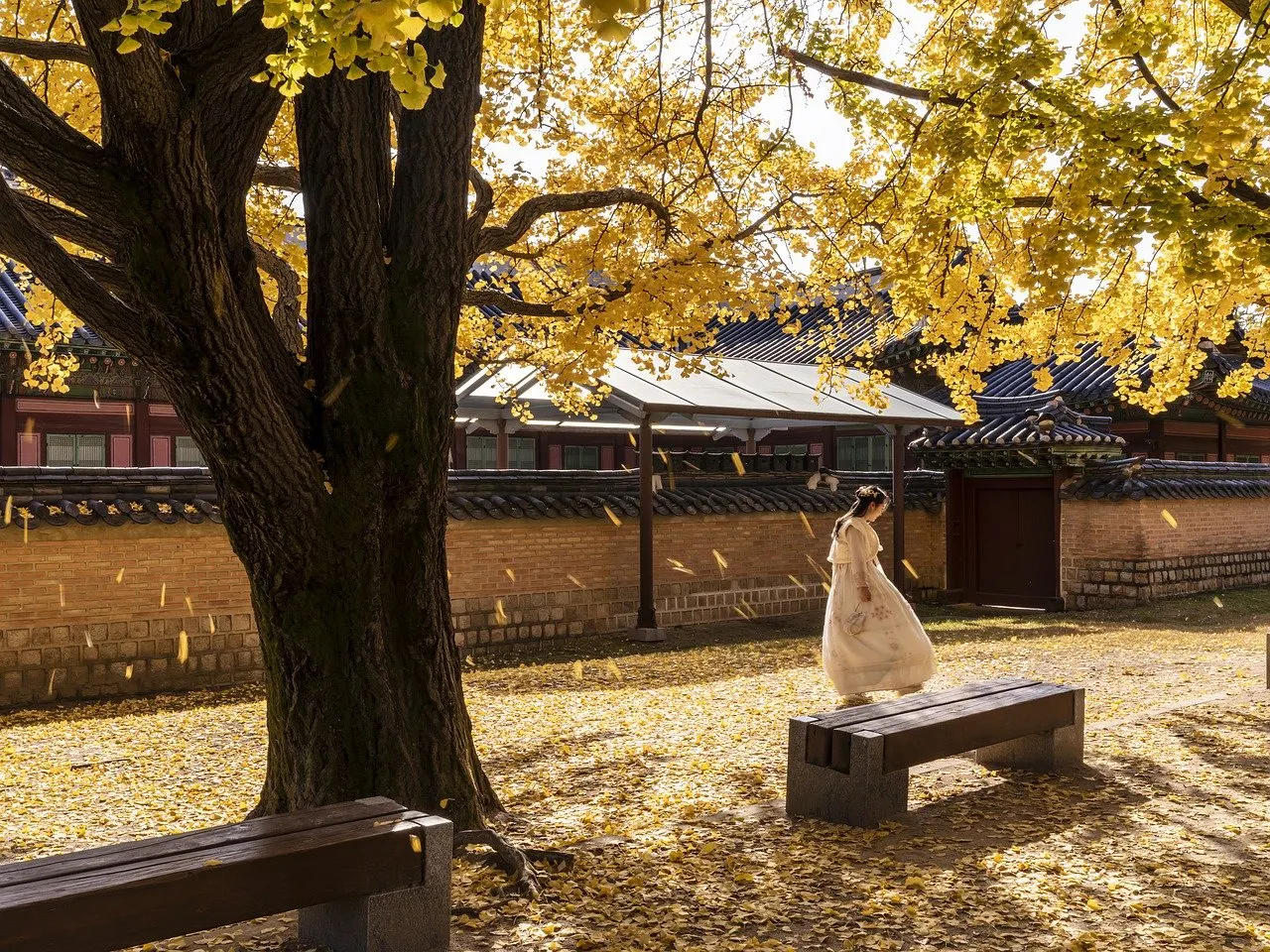
No. 01 · Autumn 2026Curated places. Real experiences. Deeper Korea.Sep · Oct · Nov
Open this issue on your phone
A season to discover
Korea differently.这个秋天,用不一样的方式遇见韩国。
Seoul · Travel · Taste · Beauty · Education · CultureEN / 中文 · Complimentary copy
Cover photo: Unknown photographer, CC0
Editor's Letter · 编者的话
Korea is changing faster than any travel guide can keep up with. A neighborhood that was quiet a year ago may be filled with galleries and pop-ups today. A pharmacy can become a beauty destination. A university campus can become the beginning of a new life abroad.
Traditional hanok houses coexist with contemporary design, while Korean food, wellness and culture continue to travel far beyond Korea. THE KOREA EDIT was created to capture this changing Korea — not everything, only what is worth knowing, experiencing and remembering now.
We chose to publish by season rather than by month. Each issue covers three months, so the copy in your hands stays useful for as long as you are here: from the first cool evenings of September, through the red mountains of October, to the slower, quieter Korea of November.
This first issue moves between very different Koreas. A royal fortress lit for a festival. A pharmacy in Myeongdong. A lecture hall in Anam. A market bench where lunch costs less than a coffee. None of them is the whole story. Together, they come close.
Every place in these pages was chosen by our editors. Where a page has been paid for, we say so. Where a number appears, we tell you where it came from.
This autumn, we invite you to discover Korea through places, people, food, beauty, education and everyday life. Welcome to the first edit.
72Pages
10Places to know
12Sections
2Languages · EN 中文
Features
Departments
The Select · 编辑精选
Ten things defining Korea this season.
What makes Korea interesting this autumn is not one destination, but the contrast between many different Koreas. A morning in a hanok neighborhood. A new beauty pop-up in Seongsu. Coffee beside the sea in Gangneung. Cinema nights in Busan. Seasonal food arriving at local markets. Students returning to university campuses as Seoul enters its most walkable season.
These are not simply places to photograph. They are pieces of contemporary Korea — carefully selected by THE KOREA EDIT, and gathered here as a starting point for everything that follows in this issue.
“Not one destination, but the contrast between many different Koreas.”
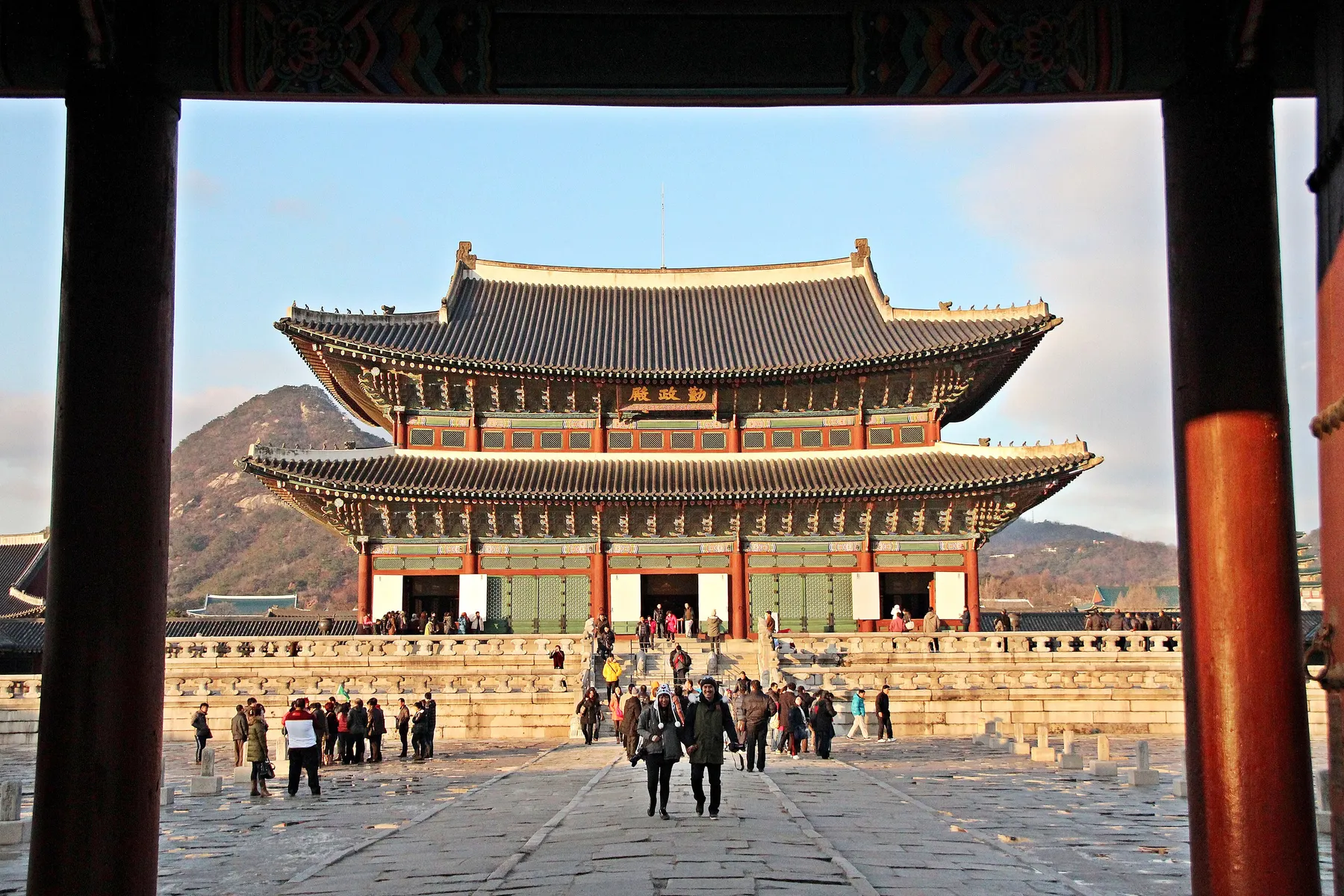
GyeongbokgungGeunjeongjeon Hall at Gyeongbokgung Palace framed by a gateway, with Bugaksan behind in low sun
The Select · Seoul
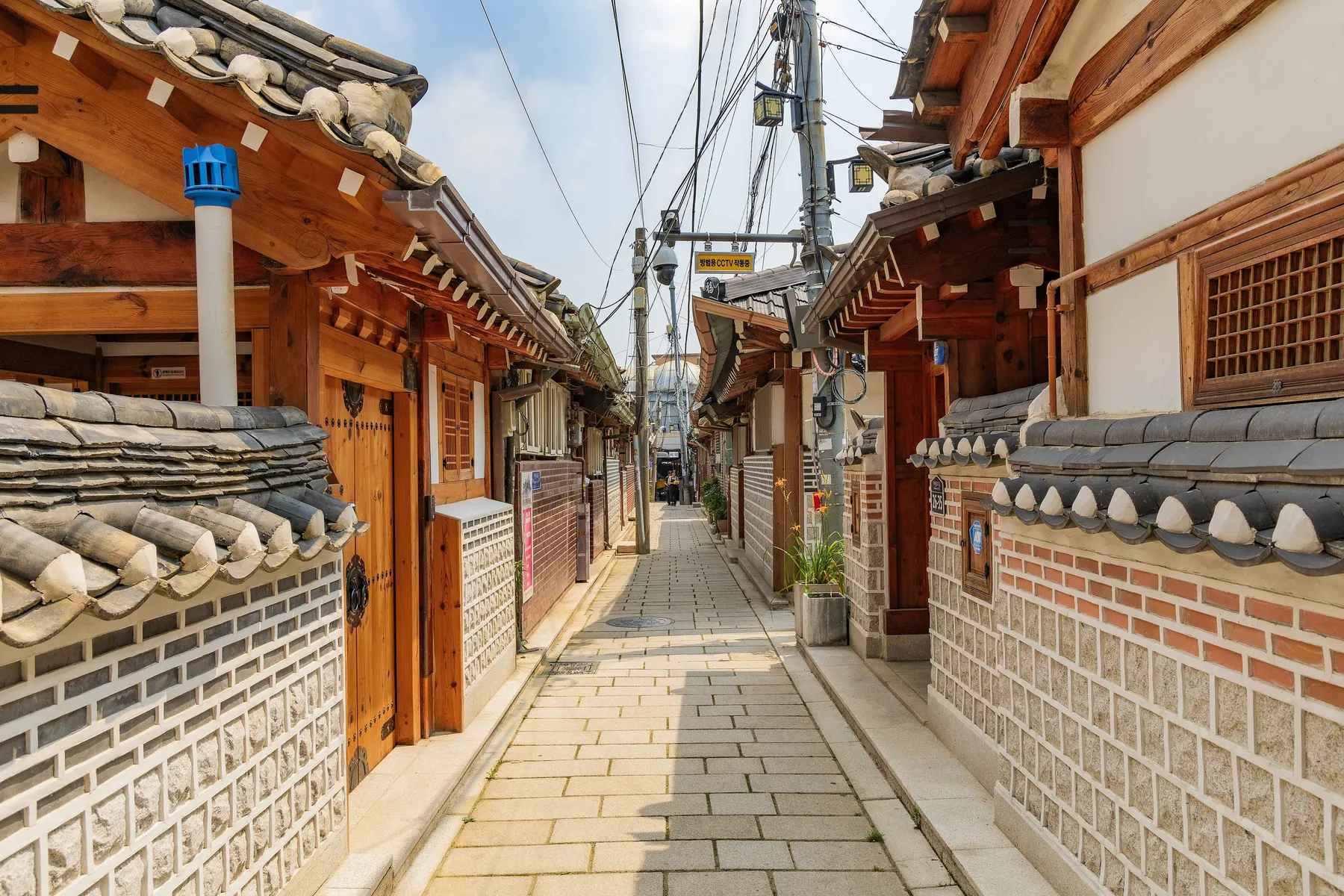
Tradition is not standing still. In Bukchon and Seochon, the hanok is becoming part of modern Seoul life.
Bukchon and Seochon remain two of Seoul's most recognizable historic neighborhoods, yet the experience is increasingly contemporary. Walk past tiled hanok roofs and you may find a small gallery, a design studio, a modern Korean restaurant or a quiet coffee bar behind the next door.
The two neighborhoods sit on either side of Gyeongbokgung, and they could hardly be more different. Bukchon, to the east, climbs the hill in tight rows of restored houses, many still homes. Seochon, to the west, is flatter and looser, a place of old markets, neighbourhood bookshops and cafés squeezed into former workshops.
From October 2 to 11, the 2026 Seoul Hanok Week will bring 82 programs to Bukchon and Seochon, including exhibitions, tours, performances and hands-on experiences. Foreign visitor programs are also included, making it the easiest week of the year to step inside houses that are usually closed.
The appeal of hanok today is no longer simply nostalgia. Young architects are restoring courtyards with steel and glass; chefs are serving tasting menus under old rafters; designers are borrowing the proportions of the paper door for furniture and packaging.
Remember that people live here. Parts of Bukchon limit tourist access in the evening and early morning, and residents ask visitors to keep their voices down. The best time to walk is mid-morning on a weekday, when the light is soft and the alleys are calm.
It is the way old architecture continues to become part of modern Seoul life — and the reason these neighbourhoods reward a slow afternoon more than a quick photograph.
The Select · Local Korea
The Korea worth traveling farther for.
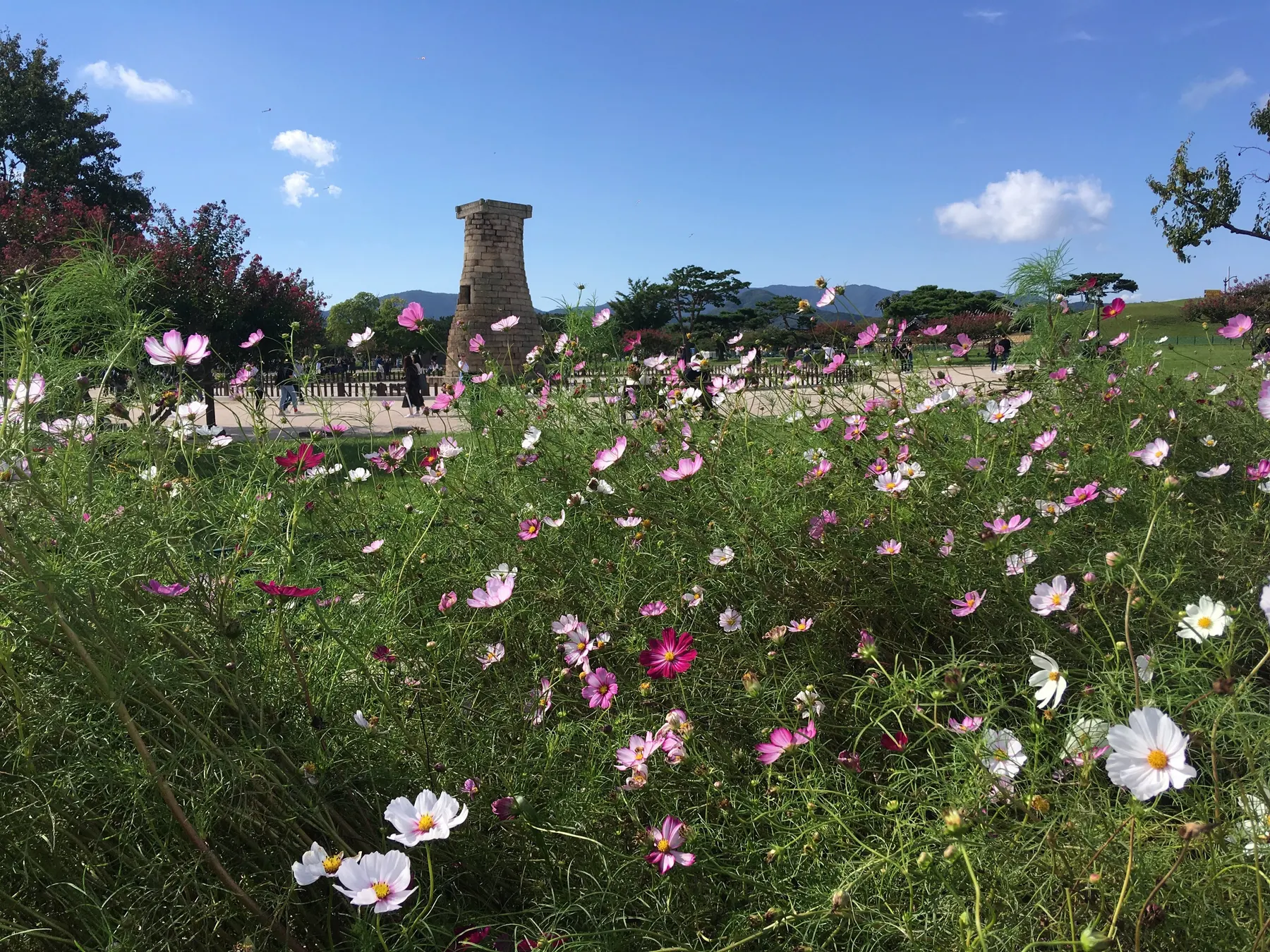
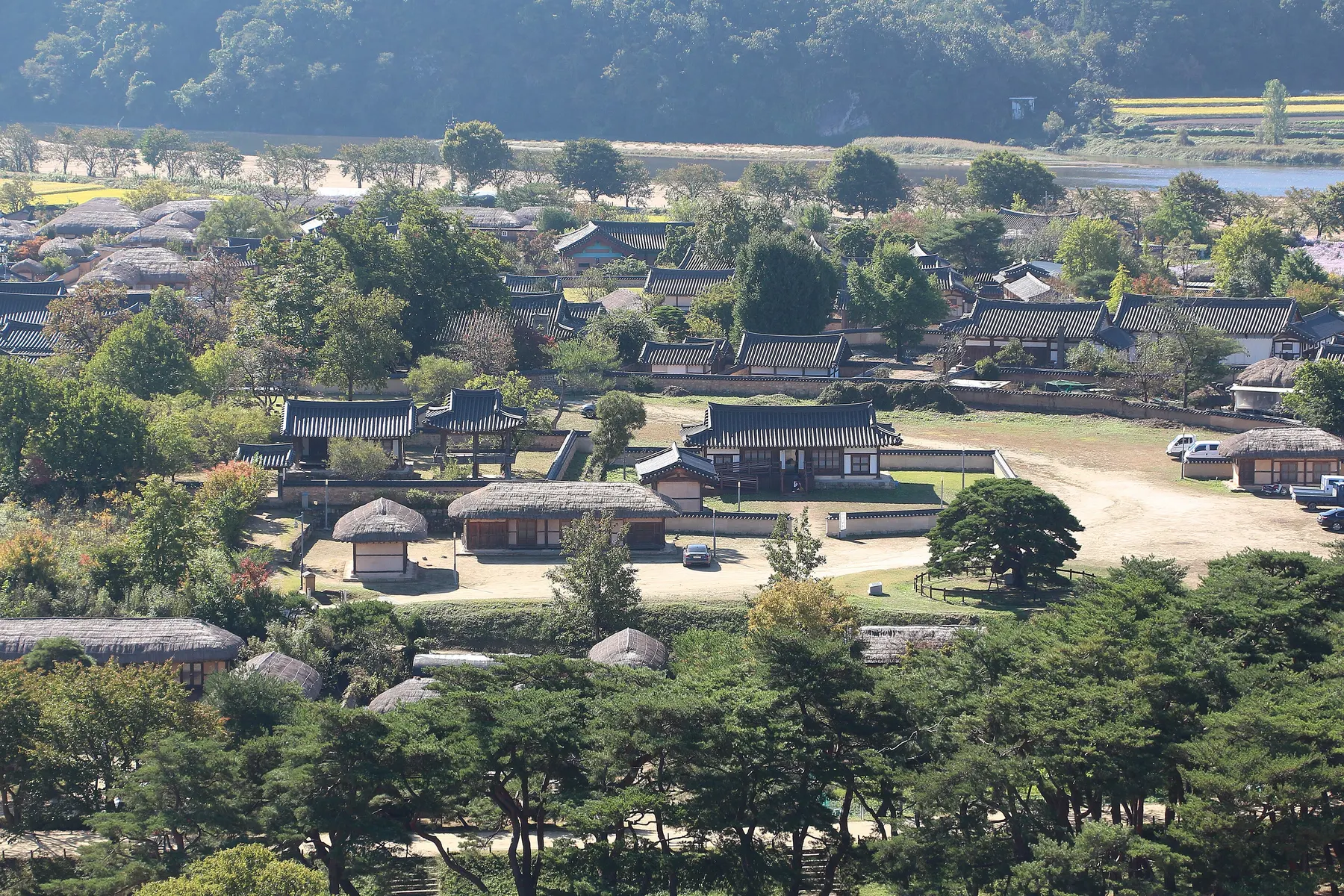
Some of Korea's most memorable autumn experiences begin after leaving Seoul. Watch the sea from a café in Gangneung. Walk along stone walls in Gyeongju. Experience traditional village life in Andong. Spend an evening beside the water in Busan. Follow silver grass across a Jeju oreum.
Regional Korea moves at a different rhythm. Food is more closely connected to season and place, local traditions are easier to see, and landscapes become part of everyday life rather than a backdrop.
Getting there is easier than most visitors expect. The KTX high-speed network puts much of the country within two or three hours of Seoul, and domestic flights to Jeju leave Gimpo throughout the day.
The trick is to resist doing too much. Pick one region, book two nights, and let the place set the pace. Eat what the town is known for. Walk the old streets in the morning, before the day-trippers arrive.
For travelers returning to Korea for the second or third time, this may be the Korea worth discovering next.
“Let one city become the destination, not another stop on a checklist.”
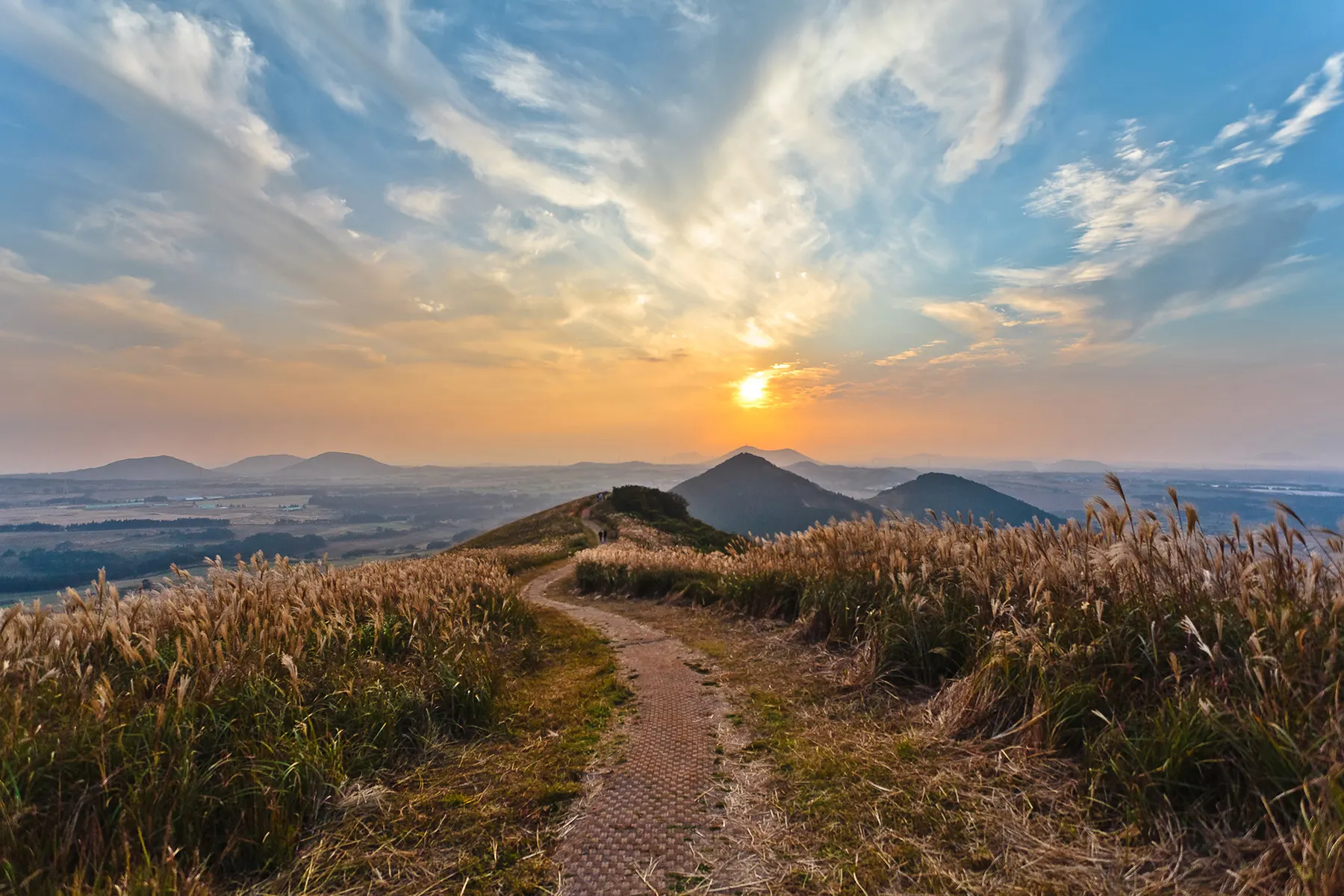
Silver grass on Saebyeol Oreum at sunset
Korea Now · 此刻的韩国
The city itself is part of the performance.
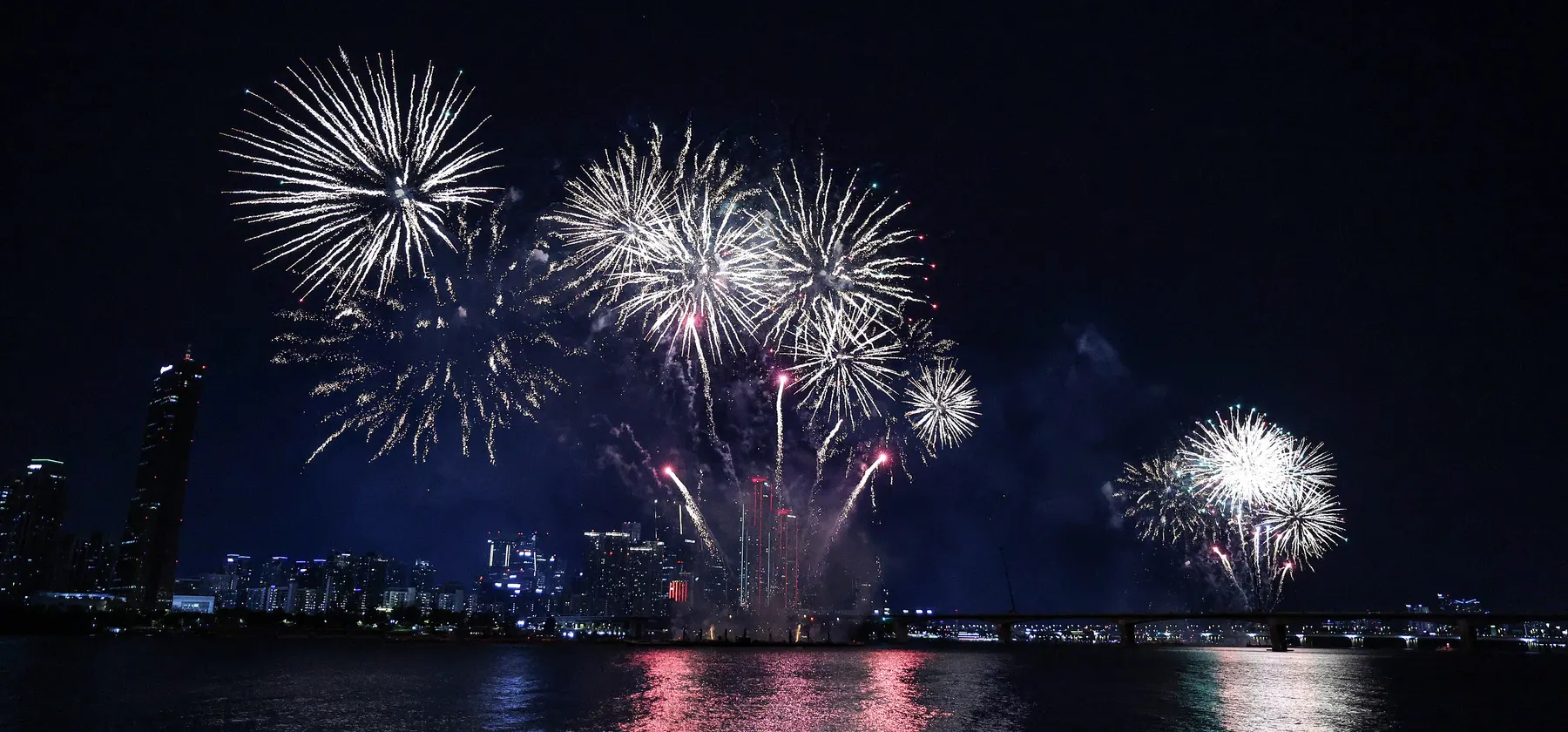
Fireworks over the Han River during the Seoul International Fireworks Festival
Photo: Korea.net, CC BY-SA 4.0200+Performances & events
Sep 18 — Nov 29Festival dates
This autumn, performances are moving beyond individual theaters. The 2026 Seoul Autumn Festa runs from September 18 through November 29, connecting performances and festivals across indoor and outdoor venues, the Hangang area and Daehak-ro.
Seoul's cultural portal describes more than 200 participating performances and events spanning theater, dance, music, traditional arts and street performance.
For a traveler, this changes the way the city can be explored. A performance in Daehak-ro, an evening walk by the Han River and a gallery visit in central Seoul can become part of the same day's itinerary.
Many outdoor events are free and need no Korean — dance, music and street performance translate easily.
This autumn, Seoul is not only a destination. It is a program in progress.
Source: Seoul Autumn Festa / Seoul cultural portal. Programme subject to change.
Korea Now · Welcome
1.61MInternational visitors, July 2026 — a monthly record
600KApprox. visitors from China, the largest group
Autumn is becoming one of Seoul's busiest international travel seasons. From September 19 to October 11, the city is operating Seoul Welcome Week: Autumn Edition, timed around major East Asian holidays including Japan's Silver Week and China's National Day holiday. Programs extend from airports to Myeongdong and other tourist touchpoints.
The timing reflects a larger trend.
Source: Seoul Metropolitan Government (estimates).
Korea Now · What's Trending
The most interesting Korea is often found between the major attractions. Pop-up stores that disappear after two weeks. Small dessert brands growing through social media. Running crews meeting beside the Han River. Fragrance boutiques designed like galleries. Limited collaborations available only in Korea.
This is why neighborhoods such as Seongsu remain so influential. Queues form on weekday mornings; by the weekend, a store may already be gone, replaced by the next.
Travelers increasingly come not only to buy something, but to discover something first.
The Korea Edit 10
Not the ten most famous places in Korea, but the ten worth knowing this season — chosen for what happens there between September and November, and for the Korea each one explains.
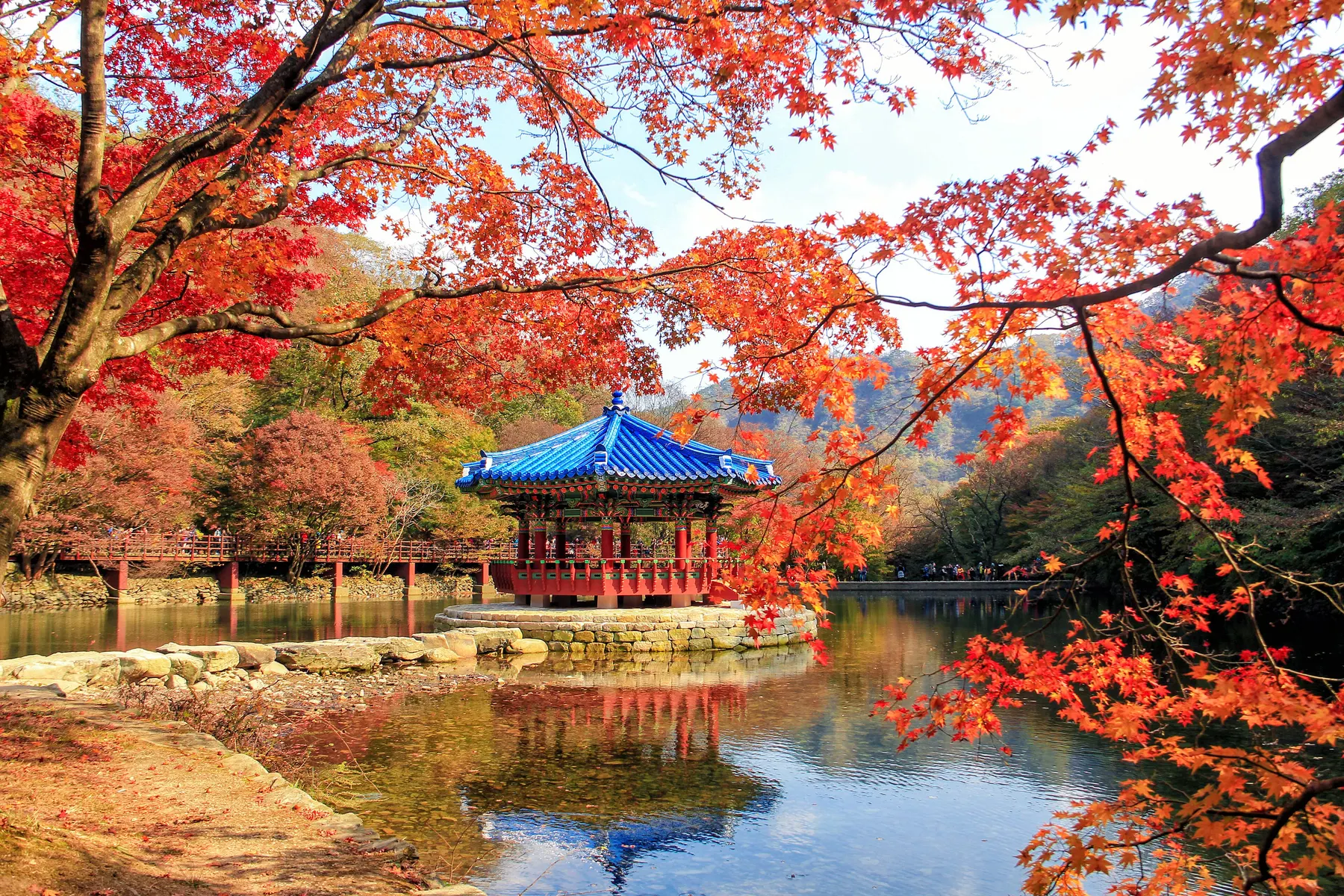
A pavilion on the pond at Naejangsan, framed by red maples
Photo: Tung Thanh Dang, CC BY-SA 3.0The Index
 01Seoraksan · GangwonWhen Korea turns red.Mid — late Oct P.16
 02Bukchon & Seochon · SeoulOld Seoul, new life.Oct 2 — 11 P.07
 03Haneul Park · SeoulA silver-grass horizon above Seoul.Mid — late Oct
 04Suwon Hwaseong · GyeonggiRoyal history outside the museum.Oct 4 — 11 P.17
 05BusanCinema, sea and city.Oct 6 — 15 P.18
 06Jinju · GyeongnamA river illuminated after dark.October
 07Gangneung · GangwonCoffee beside the East Sea.Oct 21 — 25 P.19
 08Andong · GyeongbukTradition with a living pulse.Sep — Oct
 09Gyeongju · GyeongbukAutumn among a thousand years of history.Oct — Nov
 10JejuSilver grass, oreum and open landscape.Oct — Nov
01 · Seoraksan · 雪岳山
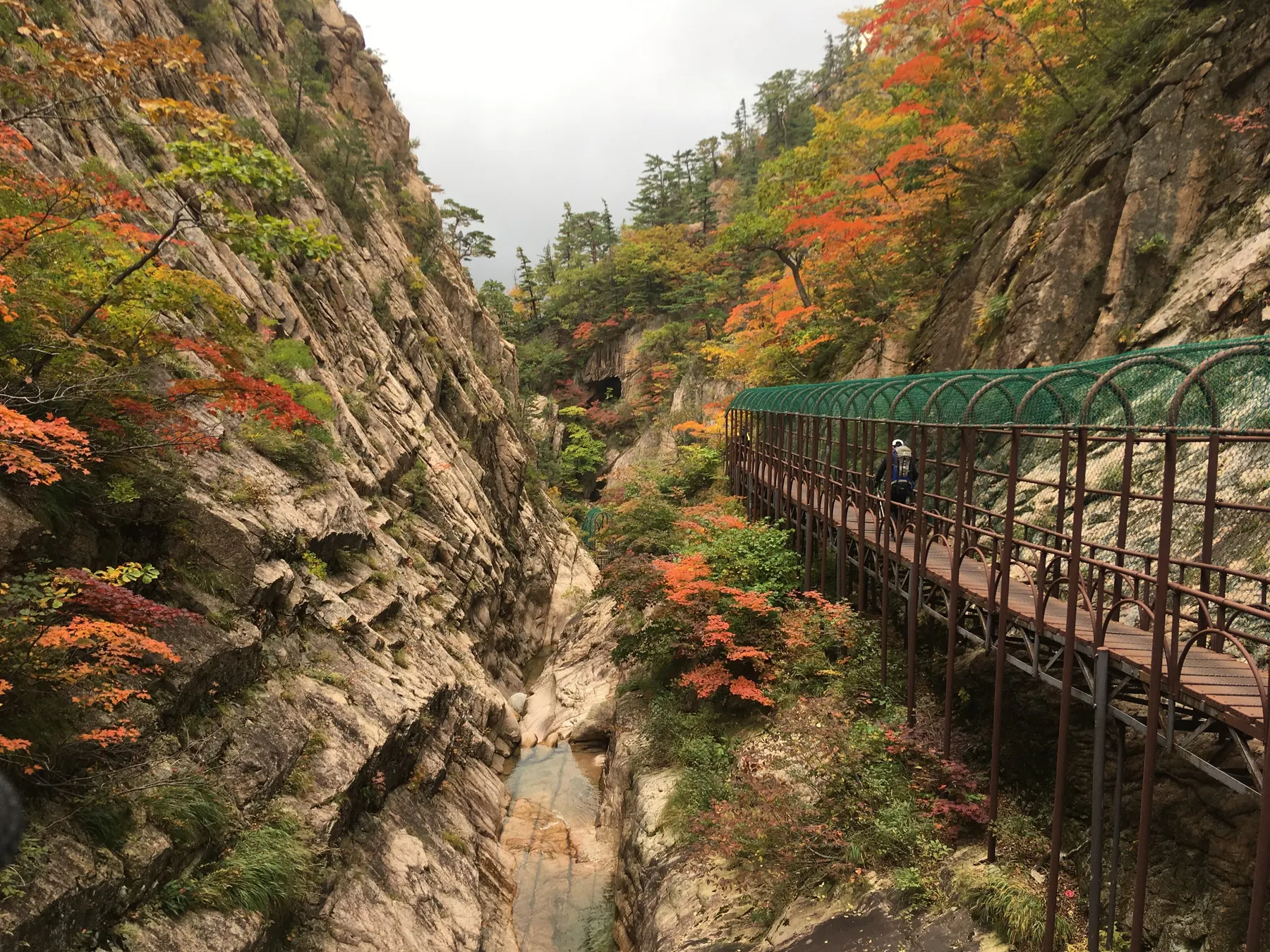
Autumn arrives early in the mountains. For many Koreans, Seoraksan remains one of the symbolic landscapes of the season: sharp granite peaks, forest valleys and trails gradually shifting from deep green to orange and red.
The colour usually appears near the summit at the start of October and reaches the lower valleys later in the month, which is when the car parks at Seorak-dong fill before breakfast.
The best experience is not necessarily reaching the highest point. Wake early. Follow a shorter trail. Stop often. Let the mountain dictate the pace.
Autumn in Korea is short, and that is precisely why it feels special.
04 · Suwon Hwaseong · 水原华城
From September 19 to October 6, media art will illuminate parts of Suwon Hwaseong, followed by the Suwon Hwaseong Cultural Festival from October 4 to 11. The royal procession reenactment is scheduled for October 4.
Built in the 1790s under King Jeongjo and now a UNESCO World Heritage Site, the fortress still wraps around the old city, and most of its wall can be walked.
Rather than experiencing Korean history behind museum glass, visitors can walk the fortress walls, enter Hwaseong Haenggung and spend the evening in the surrounding streets.
Finish with Suwon's famous fried chicken, near the Paldalmun gate.
05 · Busan · 釜山
From October 6 to 15, the 31st Busan International Film Festival returns to Busan. Screenings are centered around the Busan Cinema Center, while the festival's expanding footprint connects cinema with the wider city.
But a BIFF trip does not need to be only about films. Start in Centum City, walk along Haeundae before sunset, eat seafood after a late screening and finish the night overlooking the water.
Tickets for gala screenings go quickly; smaller films and outdoor screenings are easier, and often more memorable.
In October, cinema becomes another way to travel through Busan.
07 · Gangneung · 江陵
Gangneung's coffee culture grew from a simple habit: drinking coffee beside the sea. From October 21 to 25, the 18th Gangneung Coffee Festival returns to the city, connecting local roasteries, baristas, cafés, culture and the coastline.
What began with vending-machine coffee along Anmok Beach has become a coastline of small roasteries and cafés with a view.
Spend the morning walking Anmok Beach. Choose one café instead of five. Watch the sea change color as the afternoon passes.
In Gangneung, coffee is not simply something to drink. It has become part of the city's identity.
Discover Korea
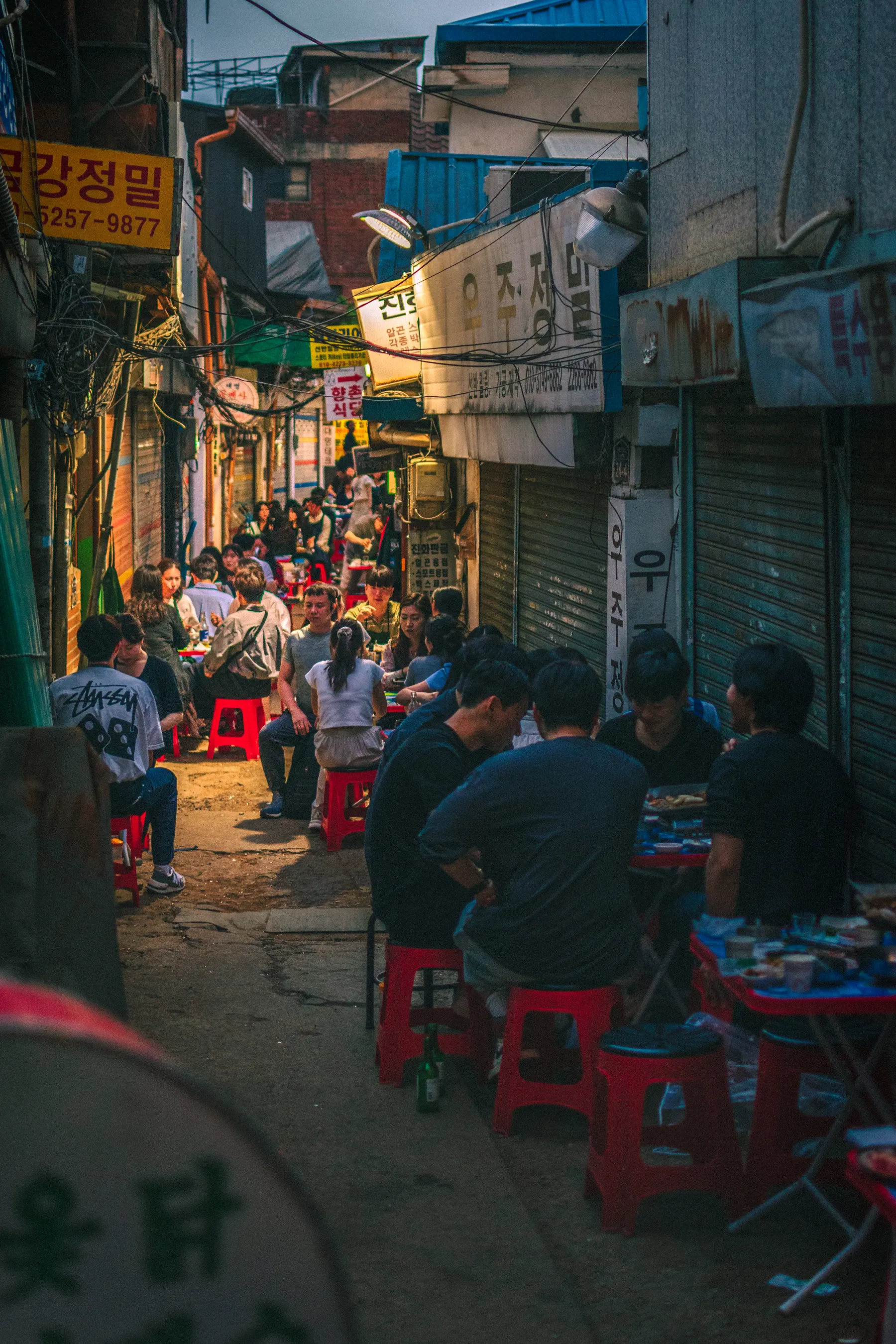
EuljiroPeople at outdoor tables crowding an Euljiro alley at night, under shop signs
There is no single Seoul — and the best trip moves between them.
There is no single Seoul. There is the ceremonial Seoul of Gyeongbokgung and Gwanghwamun. The residential calm of Seochon. The creative energy of Seongsu. The neon and music of Hongdae. The polished towers of Gangnam. The late-night restaurants hidden between office buildings.
That is why the best Seoul trip is rarely built around one district. Move between them. The subway is fast, clean and cheap; most neighbourhoods in this issue are within forty minutes of each other.
The distance between old and new, quiet and loud, local and global is what makes Seoul feel endlessly discoverable.
Discover Korea · Beyond Seoul
A second trip to Korea should feel different from the first. Choose one region and stay longer. Eat locally. Walk rather than rush. Let one city become the destination instead of another stop on a checklist.
For cinema, beaches and nights that last longer. Eat: dwaeji-gukbap.
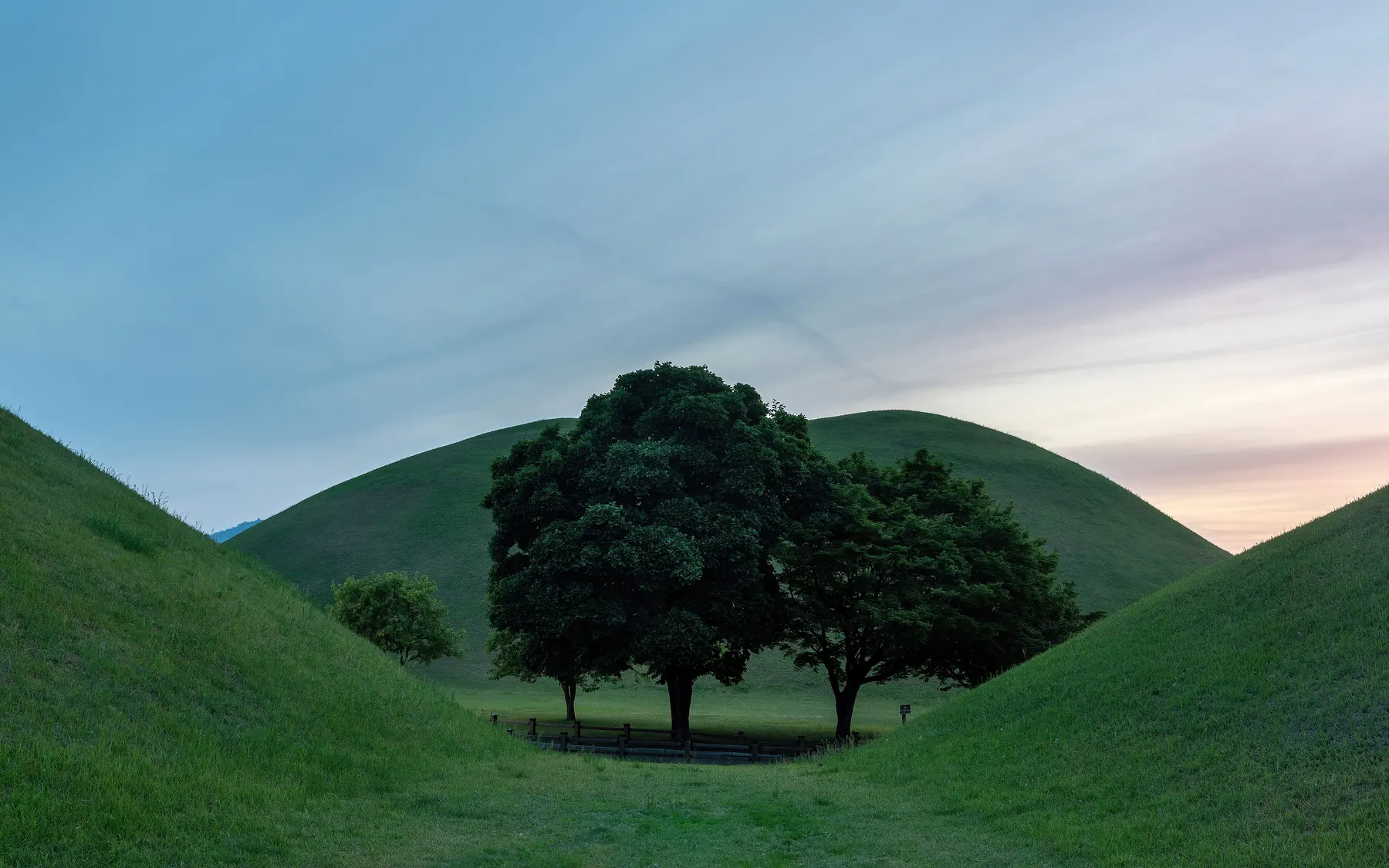
For temples, tombs and slow walks. Eat: ssambap.
For open roads, oreum and seasonal landscapes. Eat: black pork.
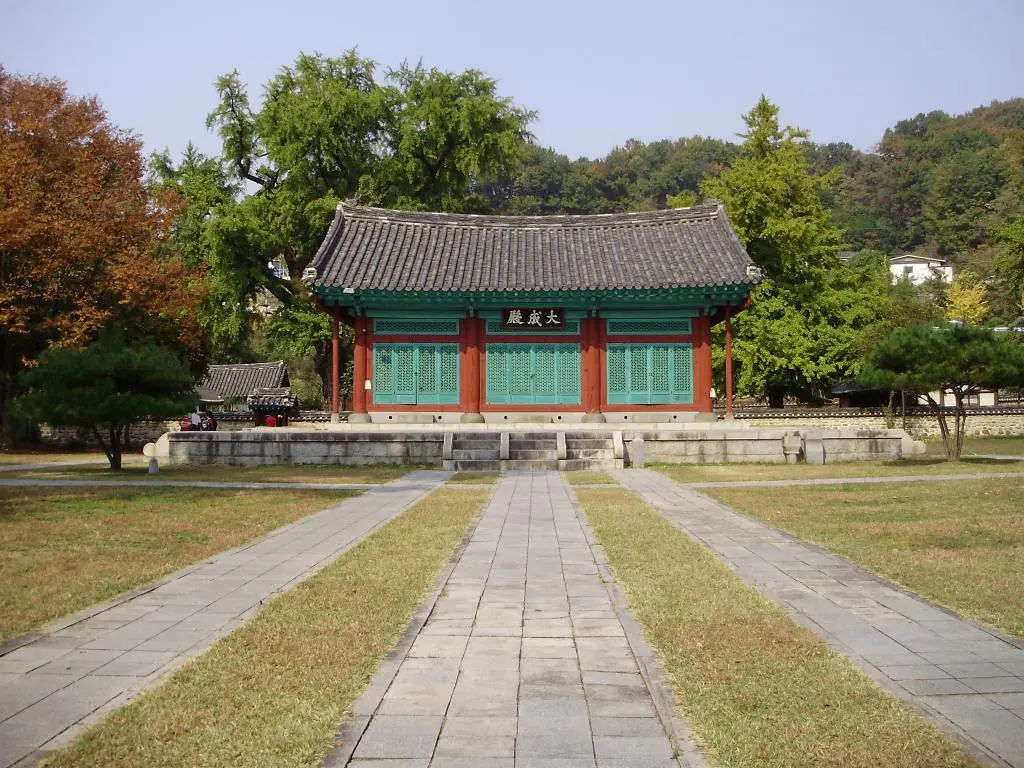
For hanok, Korean food and traditional atmosphere. Eat: bibimbap.
Editor's Route · 编辑推荐路线
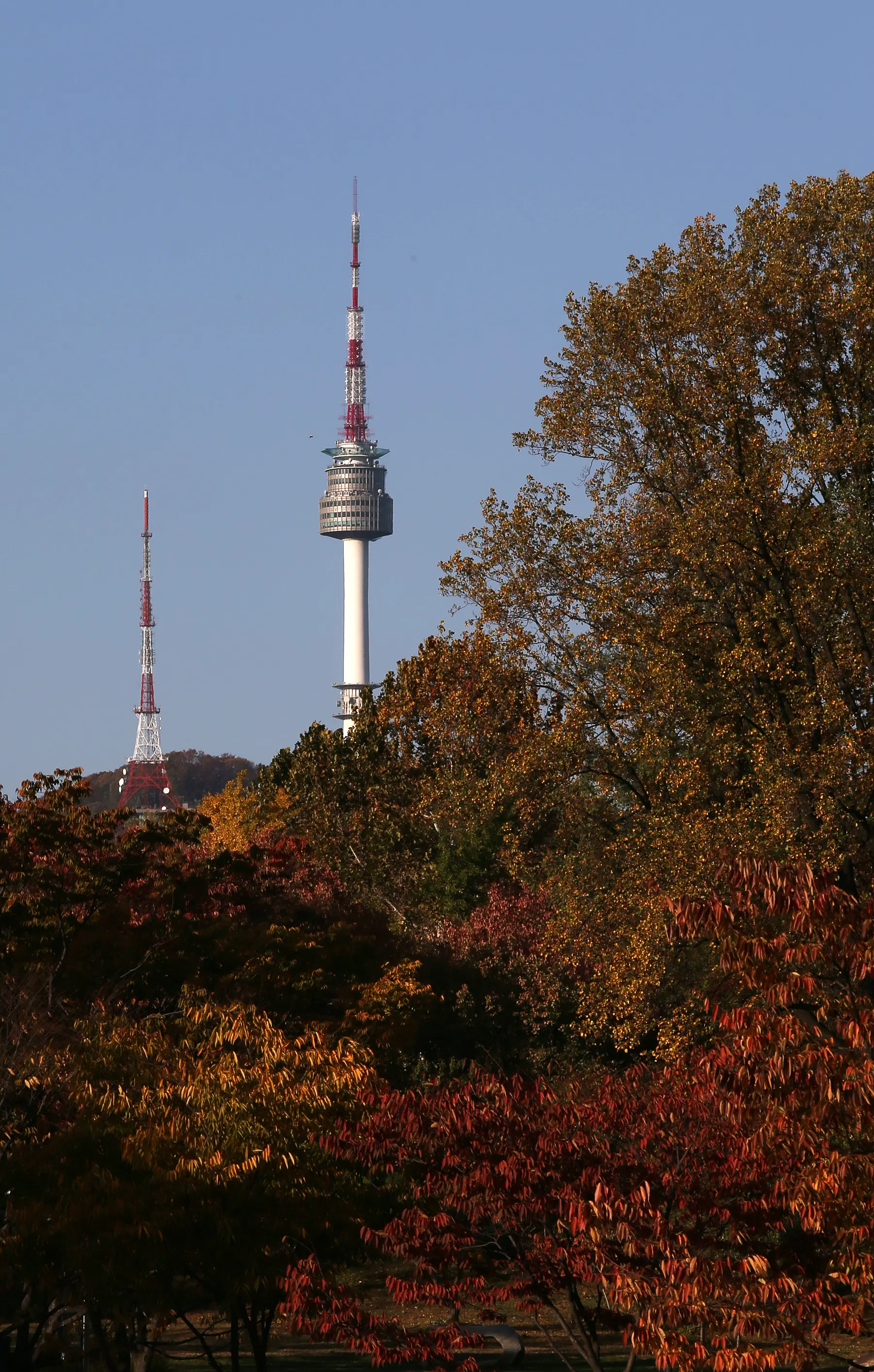
N Seoul Tower rising above autumn trees on Namsan
Photo: Jeon Han, Korea.net, CC BY-SA 2.0The secret to Seoul is contrast. Spend the morning in streets defined by traditional architecture and the afternoon inside one of the city's most experimental retail neighborhoods. By sunset, leave shopping behind and simply sit beside the Han River.
Keep the day loose. The subway links every stop, and none of the rides is longer than half an hour. If a café or a side street pulls you in, let it — the route will still be there.
Bukchon
Start before the crowds.
Seochon
Lunch and a slow walk.
Seongsu
Pop-ups, beauty and design.
Hangang
Sunset by the river.
Euljiro or Myeongdong
Dinner and Seoul after dark.
“A perfect Seoul day does not need more stops. It needs better transitions.”
For first-time visitors
If this is your first trip, do not choose between traditional and modern Seoul. See both. That contrast will explain the city better than any single landmark.
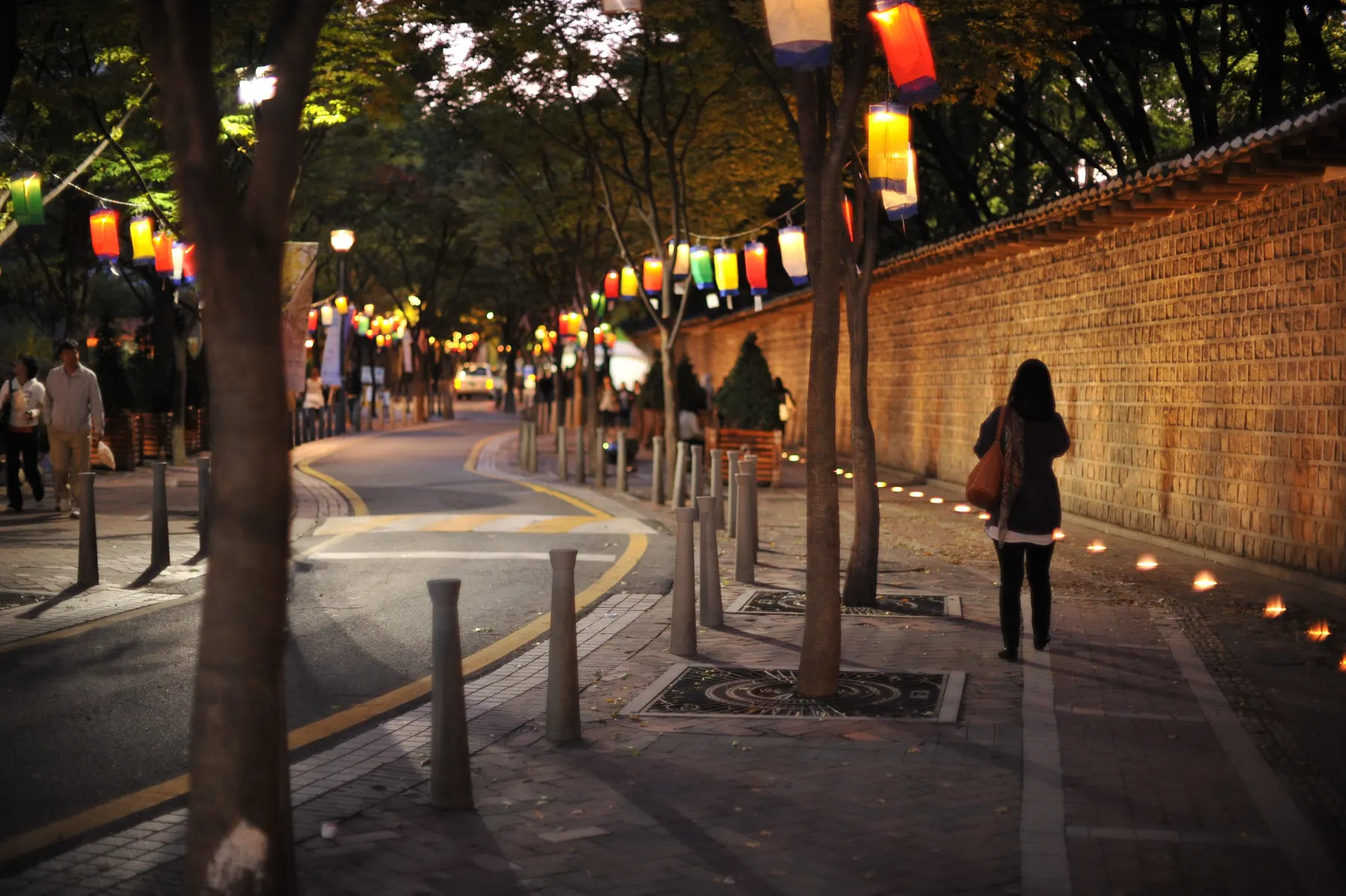
Choose Your Seoul
The beauty lover
Book the clinic for day one, shop on day two — and leave room in the suitcase.
The food lover
Lunch at the counter, dinner at the grill, the last round from a tent.
The culture lover
Palaces by day, Daehak-ro's small theatres by night.
The family traveler
Plan one big thing a day and let the parks do the rest.
Taste of Korea
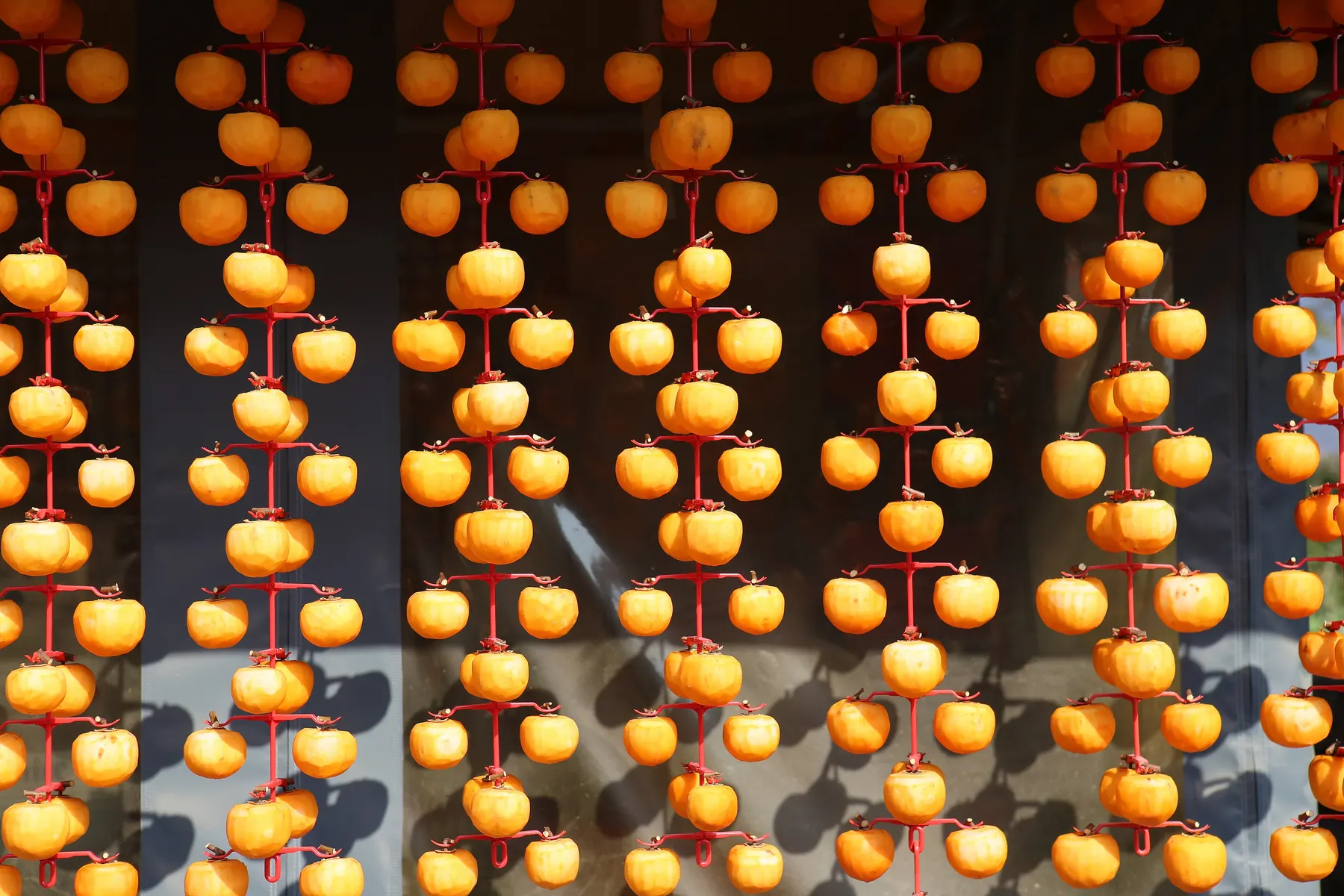
Rows of peeled persimmons hanging to dry into gotgam in Hahoe Folk Village
Korean food has always followed the calendar. Early autumn brings seafood and fruit into markets. As temperatures fall, warmer dishes return to the table. By late autumn, the flavors become deeper, richer and more comforting.
Rather than creating one permanent list of “must-eat Korean foods,” THE KOREA EDIT prefers a simpler rule: eat what is best now. Visit a market. Ask what arrived this morning. Order the seasonal special instead of the bestseller.
Restaurants make it easy: when the prawns or the first oysters arrive, banners go up outside and the price is written on a board by the door.
Food becomes far more memorable when it belongs to a particular place and moment.
“Eat what is best now.”
Market Korea
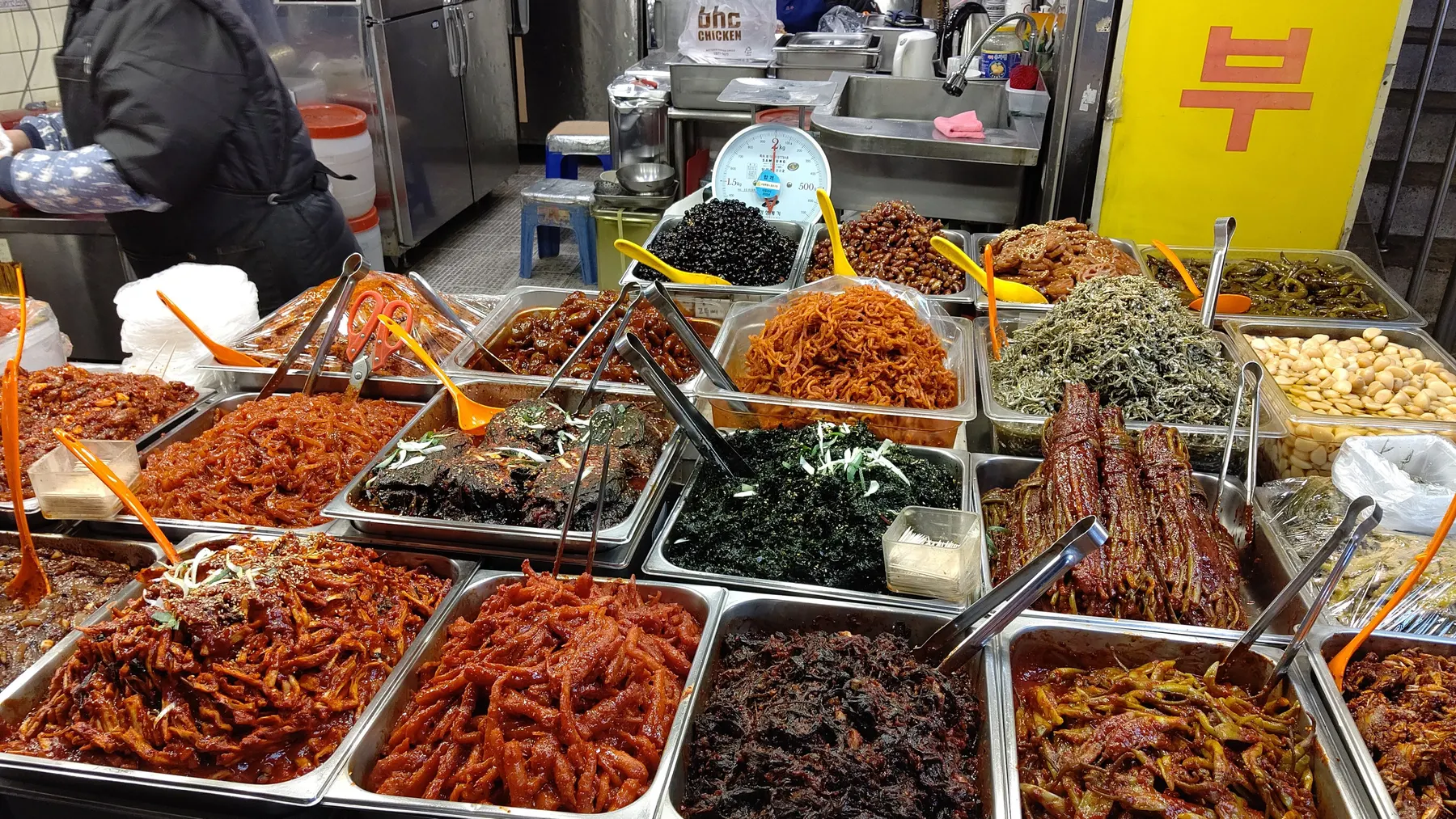
Traditional markets are not simply cheap places to eat. They are where Korean food becomes easiest to understand. You can see ingredients before they become dishes, watch vendors cook within a few steps of the customer and discover combinations that rarely appear in formal restaurants.
Visit early for produce. Visit at lunchtime for energy. Visit at night for atmosphere. And remember: the best market experience usually starts with sharing.
Editor's Table
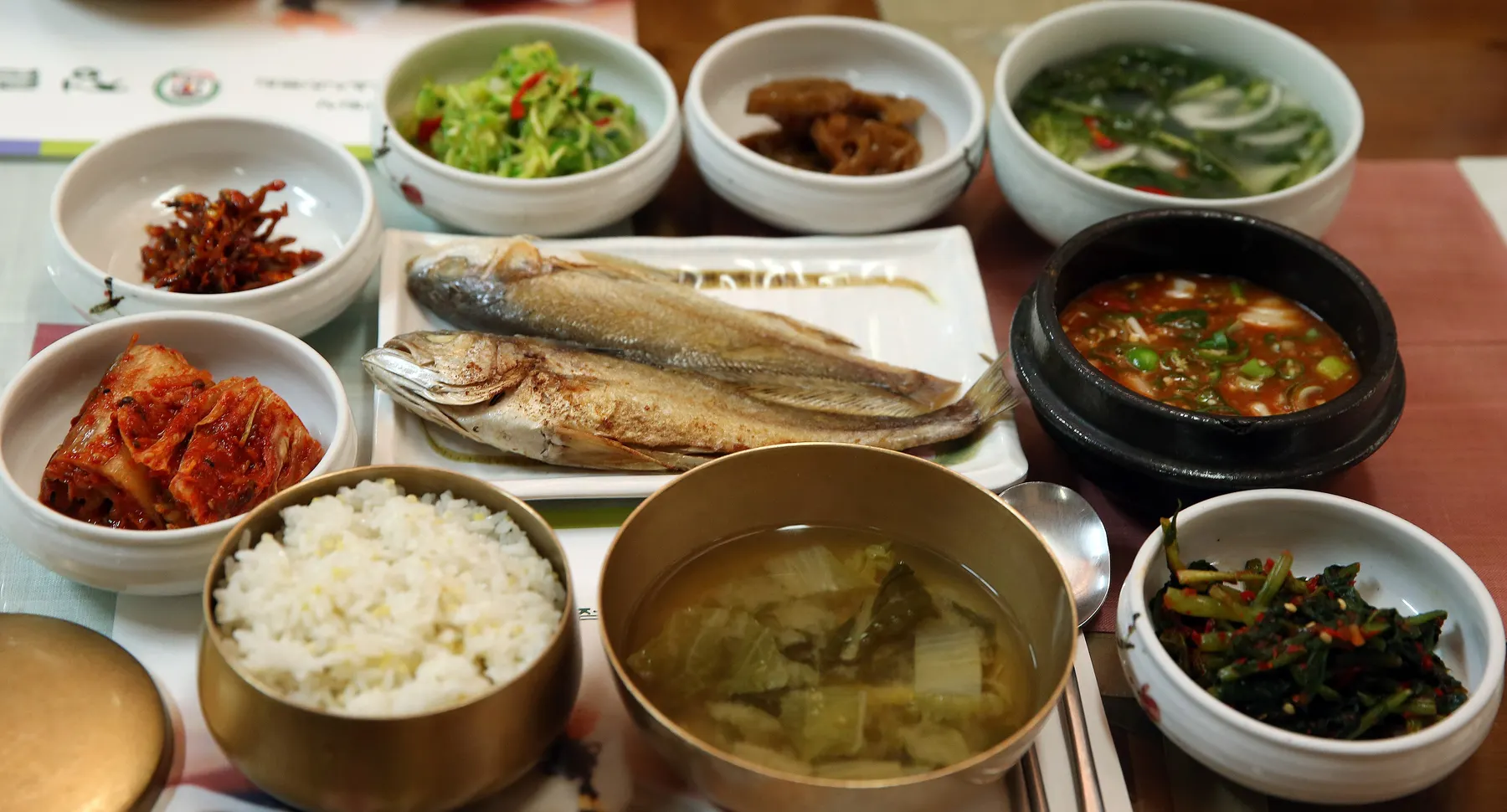
“Korean dining today moves comfortably between tradition and experimentation. That range is exactly what makes it interesting.”
K-Medical & Wellness
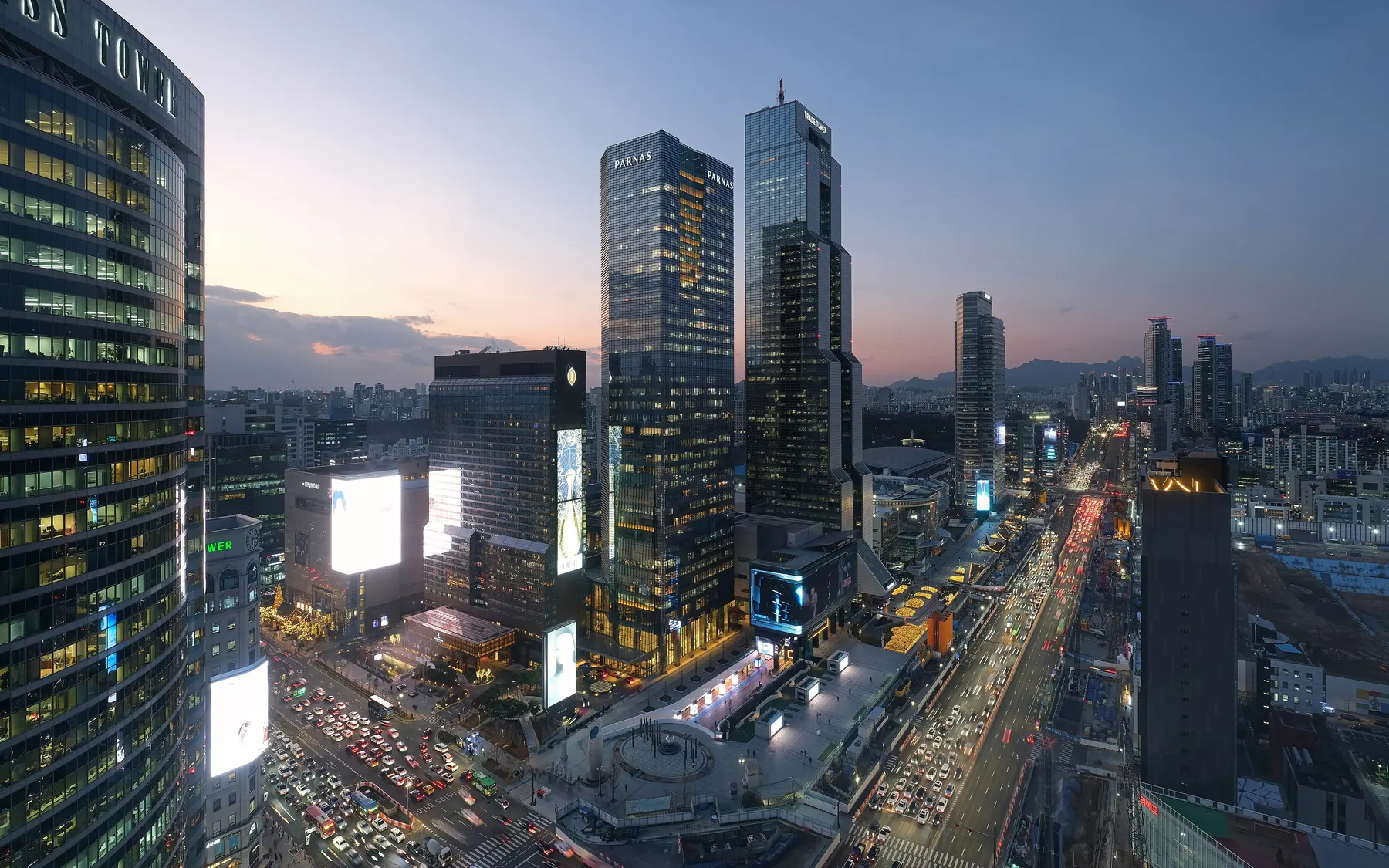
GangnamThe Teheran-ro and Yeongdong-daero crossing in Gangnam from above at dusk, with office towers
₩213.1BForeign visitor medical spending, July 2026
+66.5%Year on year — dermatology the largest share
Medical and wellness spending has become an increasingly visible part of inbound tourism. According to Korea Tourism Data Lab card-payment figures reported in August, foreign visitor medical spending reached about KRW 213.1 billion in July 2026, up 66.5% year on year. Dermatology accounted for the largest share of the reported medical spending.
For travelers, the journey is expanding beyond skincare shopping. Dermatology, beauty treatments, scalp care, wellness, dental services and health screening are increasingly appearing in travel planning.
This does not mean every service is right for every traveler. Medical treatment requires qualified providers, clear information, informed consent and appropriate follow-up.
The system has grown up around visitors. Many hospitals now run international patient centres with coordinators who speak Chinese, English and Japanese, and providers registered to treat foreign patients are listed publicly.
The new luxury of Korean travel may not simply be buying more. It may be returning home feeling better.
Source: Korea Tourism Data Lab card-payment data, as reported in August 2026.
Medical Korea 101
Before booking any medical or beauty treatment in Korea, ask five questions:
“A low price or viral post should never be the only reason to choose a clinic.”
General information, not medical advice.
Wellness Korea
Seoul may move quickly, but wellness travel asks visitors to do the opposite. A scalp treatment, a quiet spa, a morning walk, a tea ceremony or an hour spent without a phone can become just as memorable as another shopping stop.
Wellness does not always need to be dramatic. It can be a steam room at midnight, a bowl of porridge for breakfast, a quiet hour at a temple.
Sometimes the most Korean experience is simply learning how locals recover from a busy week.
K-Pharmacy & Beauty
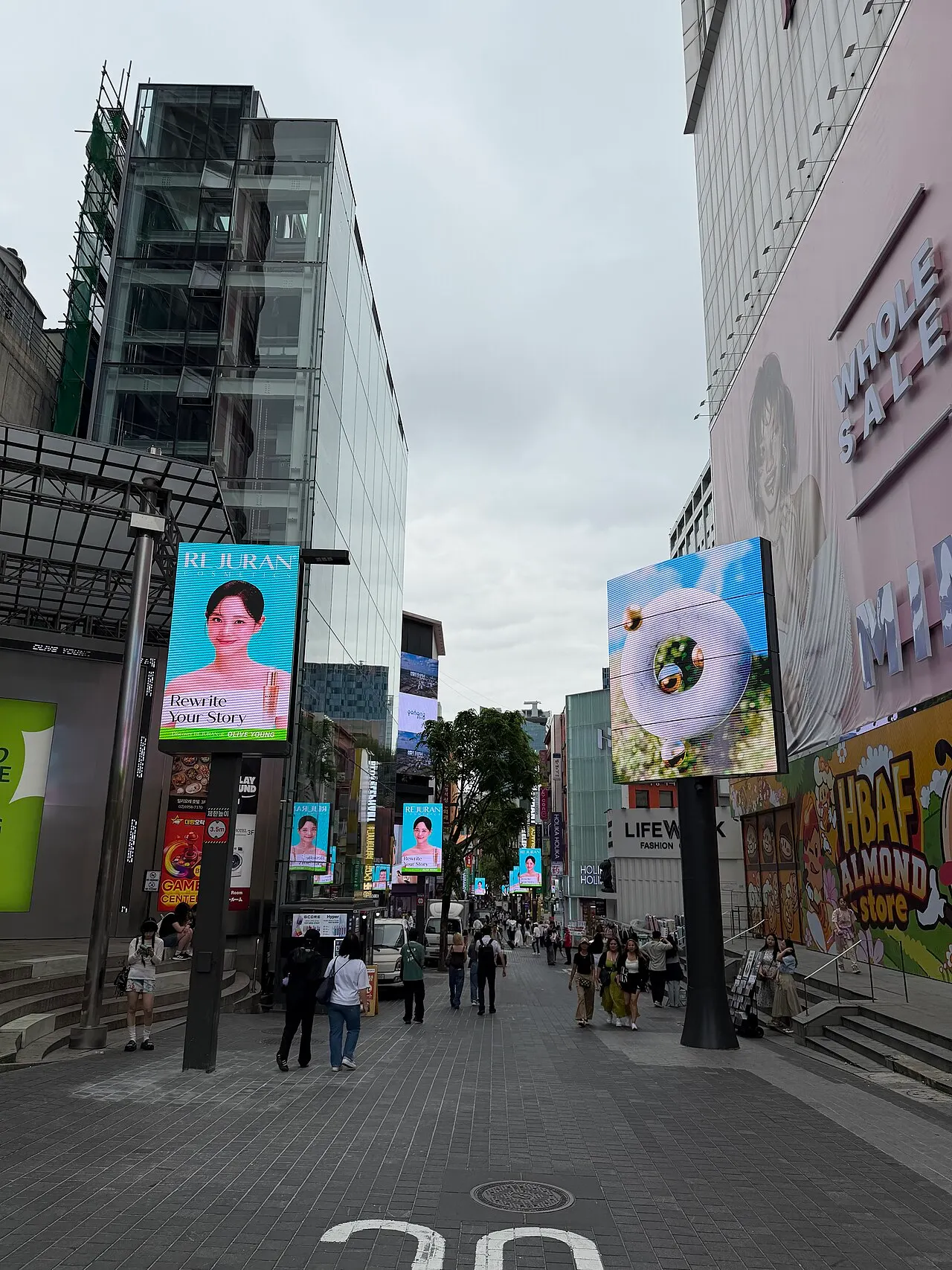
MyeongdongShoppers on a street in Myeong-dong
412KForeign visitor pharmacy transactions, June 2026 (approx.)
The Korean pharmacy is becoming an unexpected stop on the beauty itinerary. Foreign visitor pharmacy payments have risen sharply in 2026, while pharmacies in Myeongdong, Hongdae, Gangnam and Seongsu increasingly offer multilingual information and dermocosmetic selections aimed at international travelers.
One recent analysis reported pharmacy transactions rising to roughly 412,000 in June, with pharmacies accounting for the largest share of medical-category transaction counts.
The trend reflects a broader change in K-Beauty. Travelers are interested not only in makeup and skincare, but also in ingredients, aftercare and products associated with professional skin management.
In Korea, over-the-counter medicine is handed over by the pharmacist rather than taken from an open shelf, which makes every purchase a small consultation.
For medicines and medicated products, visitors should ask a licensed pharmacist rather than relying only on social-media recommendations.
Source: industry analysis of card-payment data; to be re-verified before print.
What Koreans Actually Buy
The most viral product online is not always the product Koreans use every day. Look instead at categories:
“The Korean beauty routine is often less about one miracle product and more about repetition.”
K-Beauty Edit
More ingredient-focused. Labels read like prescriptions.
More tailored — skin tests, consultations, custom blends.
A new distribution channel, and a new kind of trust.
Beauty meets health: sleep, scalp and stress.
Something to do, not only buy — the store as destination.
Pharmacist's Column · 药师专栏
And how to use K-Beauty wisely
30+SPF
UVA·UVBBoth blocked
~2hrsReapply every
For visitors to Korea, K-Beauty is one of the great pleasures of the trip. Functional cosmetics, inventive ingredients and fair prices make the country a place to experience global beauty trends first-hand. On a winter visit, though, something matters as much as buying new products: protecting your skin from Korea’s cold, dry climate.
Korean winters alternate between freezing outdoor air and dry, heated interiors. In these conditions, moisture is easily lost from the skin’s surface and the skin barrier weakens, which can bring dryness, itching, flaking and redness. Travelers arriving from warm, humid regions may be especially sensitive to the change.
Olive Young and Korean pharmacies offer a wide range of moisturizers. Rather than following flashy advertising, it pays to understand what each ingredient does.
Hyaluronic acid and glycerin are the classic moisturizing ingredients that draw water into the skin. Ceramides, key lipids in the skin’s outer layer, help repair a damaged barrier and reduce water loss.
Dexpanthenol and panthenol, also widely used in pharmacy ointments, form a protective film on the skin and are useful for moisturizing and soothing, while squalane and petrolatum help limit evaporation from the skin’s surface.
In winter, rather than focusing on hydration alone, it is practical to finish with an ingredient such as dexpanthenol that acts as a final shield, keeping the skin’s moisture from escaping into the dry air.
Ingredients derived from Centella asiatica (CICA), much talked about in K-Beauty, are also widely used to soothe the skin. They are not non-irritating for everyone, however, and the mere presence of an ingredient does not guarantee that a product works.
The famous “10-step routine” so closely tied to K-Beauty is not necessary for everyone. Using many products at once can in fact raise the risk of irritation and contact dermatitis.
Sheet masks, a tourist favorite, do not work better the longer they stay on. Follow the time stated on each product, and if your skin is sensitive, choose ones with fewer fragrances and potentially irritating actives.
Likewise, avoid overusing scrubs or AHA and BHA peels just because winter has made your skin flaky. When skin is dry and stinging, restoring the barrier comes before exfoliating.
Sun protection is often neglected in winter, but UVA, which contributes to skin aging, is present in every season. If you are using a brightening product for melasma, sunscreen is essential rather than optional, if only to help suppress new melanin.
At ski resorts and snowy sights, UV reflected off the snow must also be considered. Outdoors, use a sunscreen of SPF 30 or higher that blocks both UVA and UVB, and reapply about every two hours during long periods outside.
The dewy sunscreens popular in Korea can be a good choice, but check the protection rating and how well it suits your skin, not just how it feels.
Jjimjilbang and saunas are a special cultural experience in Korea. But long soaks in very hot water and vigorous scrubbing can damage the skin’s protective layer and worsen dryness and itching.
If your skin is dry or sensitive, avoid very hot water and long sauna sessions, and apply plenty of moisturizer right after showering, while the skin is still slightly damp.
Take particular care with atopic dermatitis or sensitive skin, as high temperatures and friction can make symptoms worse.
Korean pharmacies can offer professional advice based on the condition of your skin. For simple dryness, a pharmacist can suggest a suitable moisturizer; for itching or irritation, you can consult one about how best to manage it.
Not every skin problem can be solved with cosmetics. Severe redness, oozing, cracked skin or persistent itching may point to dermatitis or another skin condition. In that case, rather than trying new products indiscriminately, consult a pharmacist or see a dermatologist.
K-Beauty’s appeal lies in its endless new products and innovative ingredients, but the basic principles of healthy skin do not change.
Ample moisture, a protected skin barrier and proper sun protection: these three are the core of winter skincare.
Enjoy trying K-Beauty products while you travel in Korea, but choose what suits your skin rather than what is on trend.
Beautiful skin begins not with how many products you use, but with how well you use what your skin actually needs.
Hyaluronic acid · Glycerin
Classic humectants that pull moisture into the skin.
Ceramide
Helps repair a damaged barrier and reduce water loss.
Dexpanthenol · Panthenol
Forms a protective film; moisturizes and soothes.
Squalane · Petrolatum
Limits evaporation from the skin’s surface.
“The key to healthy winter skin is not simply adding moisture, but protecting the skin barrier and minimizing water loss.”
Special Report · 特别报道
Korea is increasingly becoming more than a travel destination.
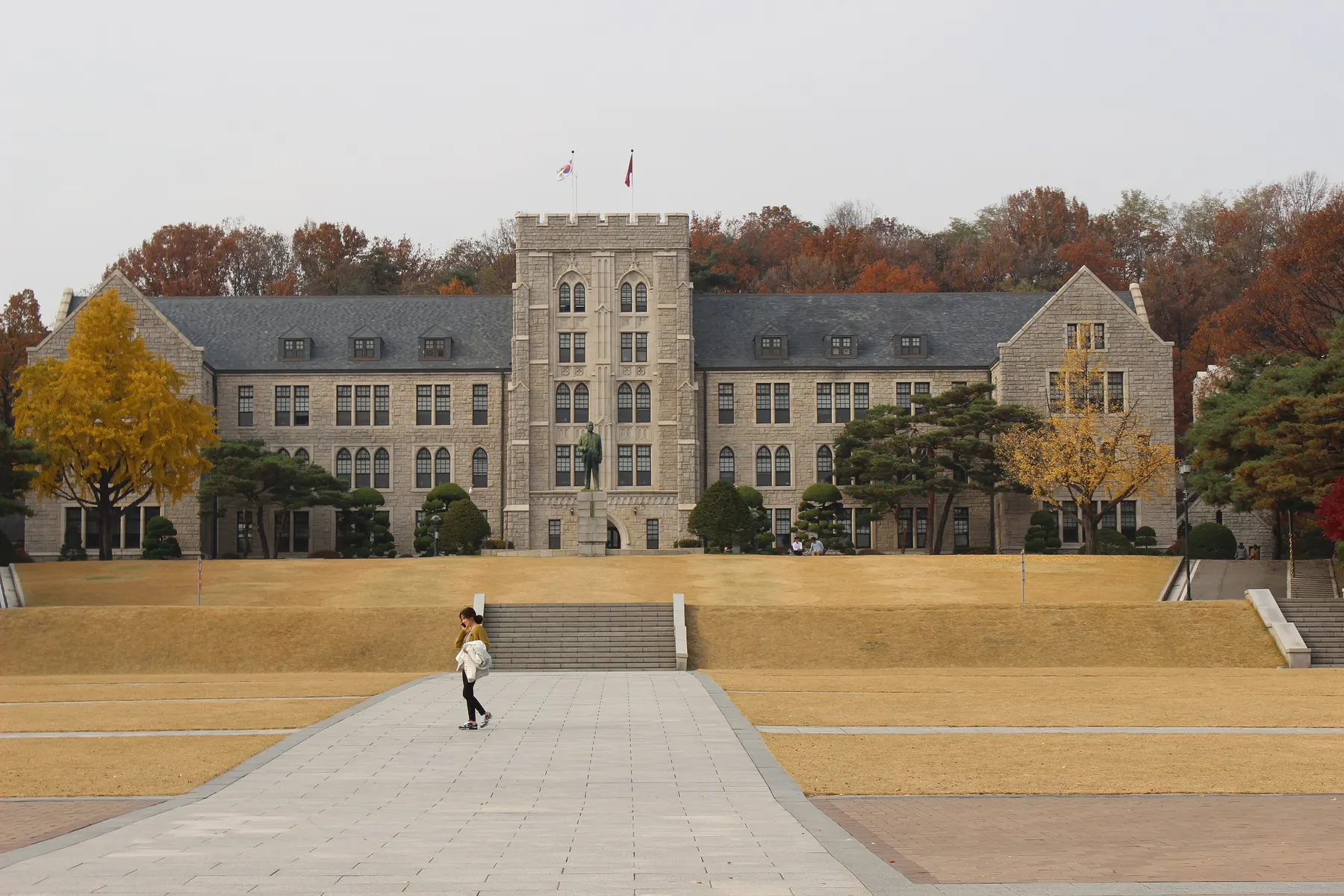
Korea University's main hall on the Anam campus in autumn
Photo: Mannaa mohamed, CC BY-SA 4.078,890Chinese students · 25.7% of the total
70,856Chinese students in degree programs — the largest group
Korea is increasingly becoming more than a travel destination. According to Korea's 2026 Basic Education Statistics, the number of foreign students enrolled in Korean higher education reached 307,464, up 21.3% from the previous year.
Chinese students numbered 78,890, representing 25.7% of all international students. Among foreign students enrolled in degree programs, Chinese students remained the largest nationality group at 70,856.
These students experience a Korea that short-term travelers rarely see. Lectures. Campus clubs. Convenience-store dinners during exams. Cafés near school. Korean friends. Part-time life. Career decisions.
Many arrive through a year of Korean language study before starting a degree, and the first semester is often the hardest: a new language, a fast academic pace, and group projects from the first week.
Education offers another way to understand the country — not from the outside, but from within everyday life.
Source: Ministry of Education, 2026 Basic Education Statistics.
Inside Korea University
A university campus can be one of the most interesting places to understand Korean society. At Korea University, historic stone architecture sits alongside research facilities, cafés, libraries, student clubs and the busy neighborhood of Anam.
Founded in 1905, the university is known for its granite halls, its crimson colours and a famous rivalry: each autumn its sports teams meet Yonsei University's in games that fill the stands with red and blue.
The campus is not only where students study. It is where friendships, ambitions and ideas about the future begin.
Professor's View · 教授视角
As the international student population grows, Korean universities face a new question. Attracting students is only the first step. How can universities help international students learn well, build relationships with Korean students, develop careers and feel that they truly belong?
For this issue, THE KOREA EDIT speaks with a Korea University professor about the future of global education in Korea.
Chinese Student Voice · 中国留学生
Why Korea? For some students, the answer begins with K-pop or Korean dramas. For others, it is academic opportunity, proximity to China, technology, business or the possibility of building a career in Asia.
But the experience after arrival is often far more complex — and more interesting — than the reason they first came.
“The Korea I imagined before arriving and the Korea I live in now are different.”
Student voice · to be replaced after interview
One Day in Anam · 安岩洞的一天
You do not have to be a student to enjoy a university neighborhood. Spend one day in Anam and you will see another version of Seoul — younger, more affordable and closely connected to everyday life.
Campus walk
Start at the main hall.
Student lunch
Cafeteria trays, a few thousand won.
Library
Quiet hours in the reading rooms.
Anam café
Laptops and iced americanos.
Local shopping
Stationery and small shops.
Dinner with friends
Chicken, beer, long talk.
K-Culture & People
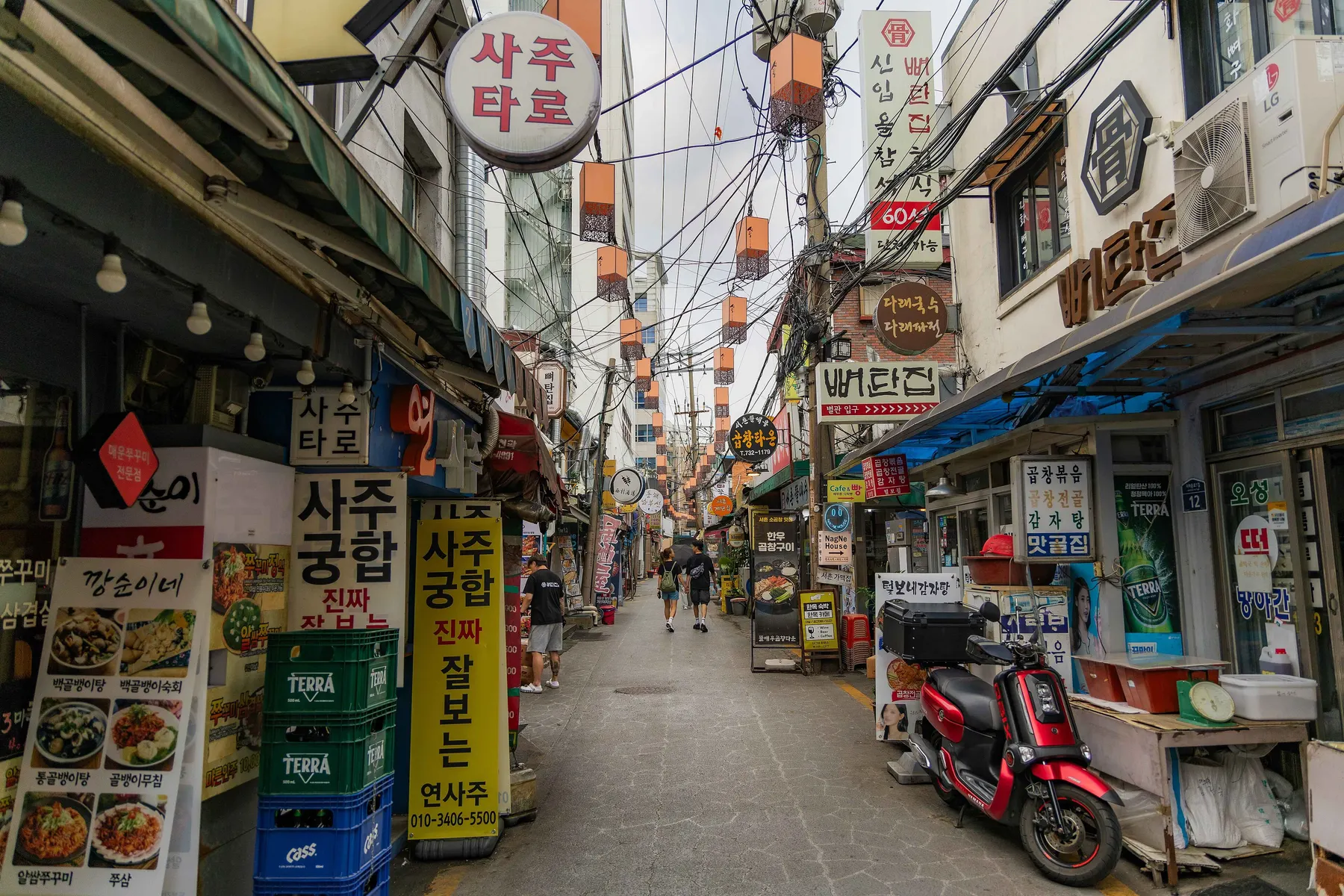
A narrow shop street hung with signs and menus in Sejong Village Food Street, Seochon
Places become meaningful because of the people behind them.
In every issue, THE KOREA EDIT meets the people shaping modern Korea. Because understanding Korea requires more than knowing where to go. It requires knowing who is changing it.
Korea Select · 韩国精选
Not every place needs to be famous. KOREA SELECT highlights places worth discovering for their quality, story, service, location or uniquely Korean experience. Scan the code beside each listing for maps, menus and booking in English and Chinese.
KOREA SELECT is not a ranking. Listings are chosen by the editors; partner venues are marked as such, and every listing is revisited each season.
Eat
A hanok dining room serving a seasonal Korean set, with a courtyard view.
Stay
River-view rooms, a short walk from the Hangang parks.
Beauty
Registered for foreign patients; Chinese-speaking coordinators.
Wellness
Scalp diagnosis and a sixty-minute herbal head spa.
Discover
A basalt-stone café in a tangerine orchard.
Partner names shown as placeholders in this sample layout
Travel eventually ends. But the best trips change what you notice afterward. A flavor you look for again. A skincare ritual you continue. A brand you remember. A university you consider. A neighborhood you want to revisit.
The following pages introduce Korean brands and partners that form part of today's Korean lifestyle. Not simply things to buy.
“Things that tell a story about Korea.”
12 · Korean Brands to Know
Things that tell a story about Korea. These are the brands' own pages, shown here as printed in the issue(pages 55 to 71). Editorial pages are chosen by our editors and never paid for.
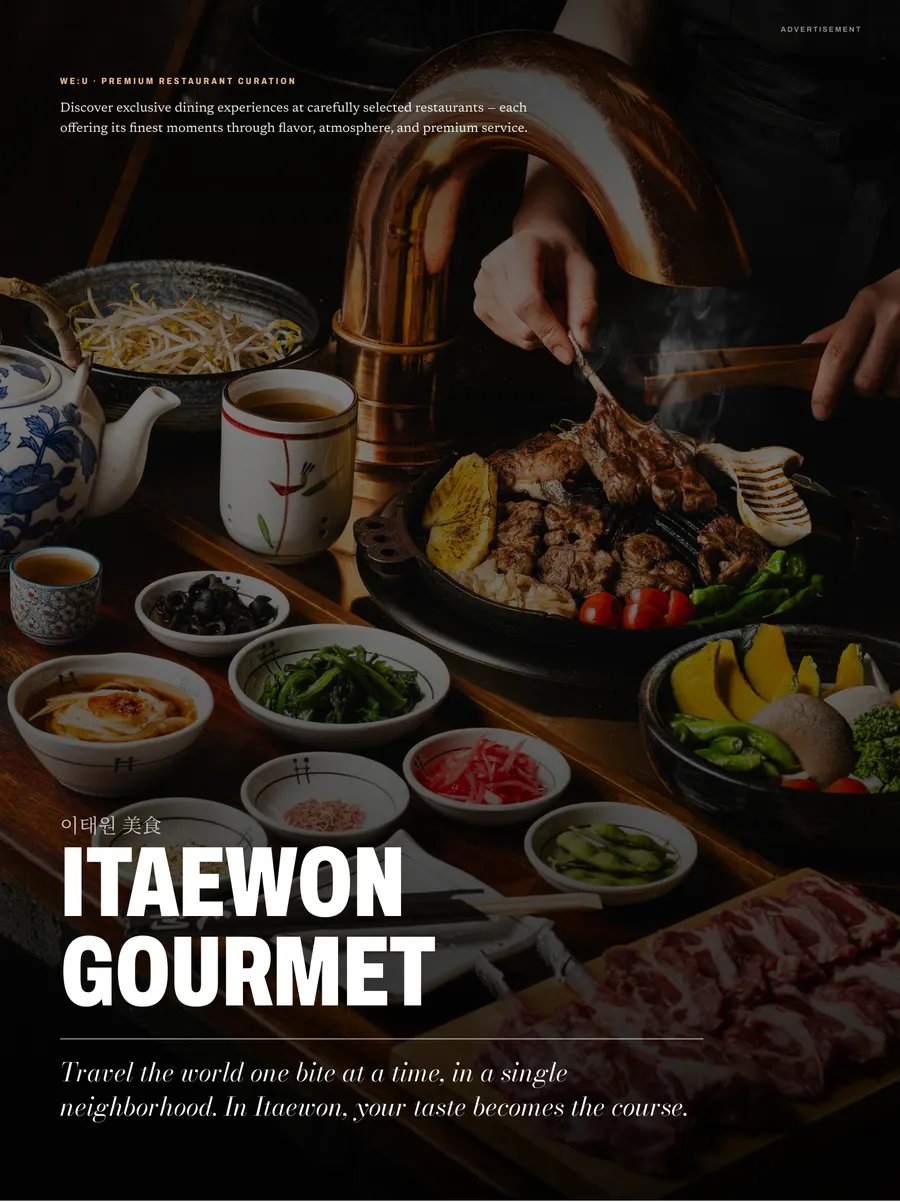
Premium restaurant curation · Itaewon · Brand page, page 55
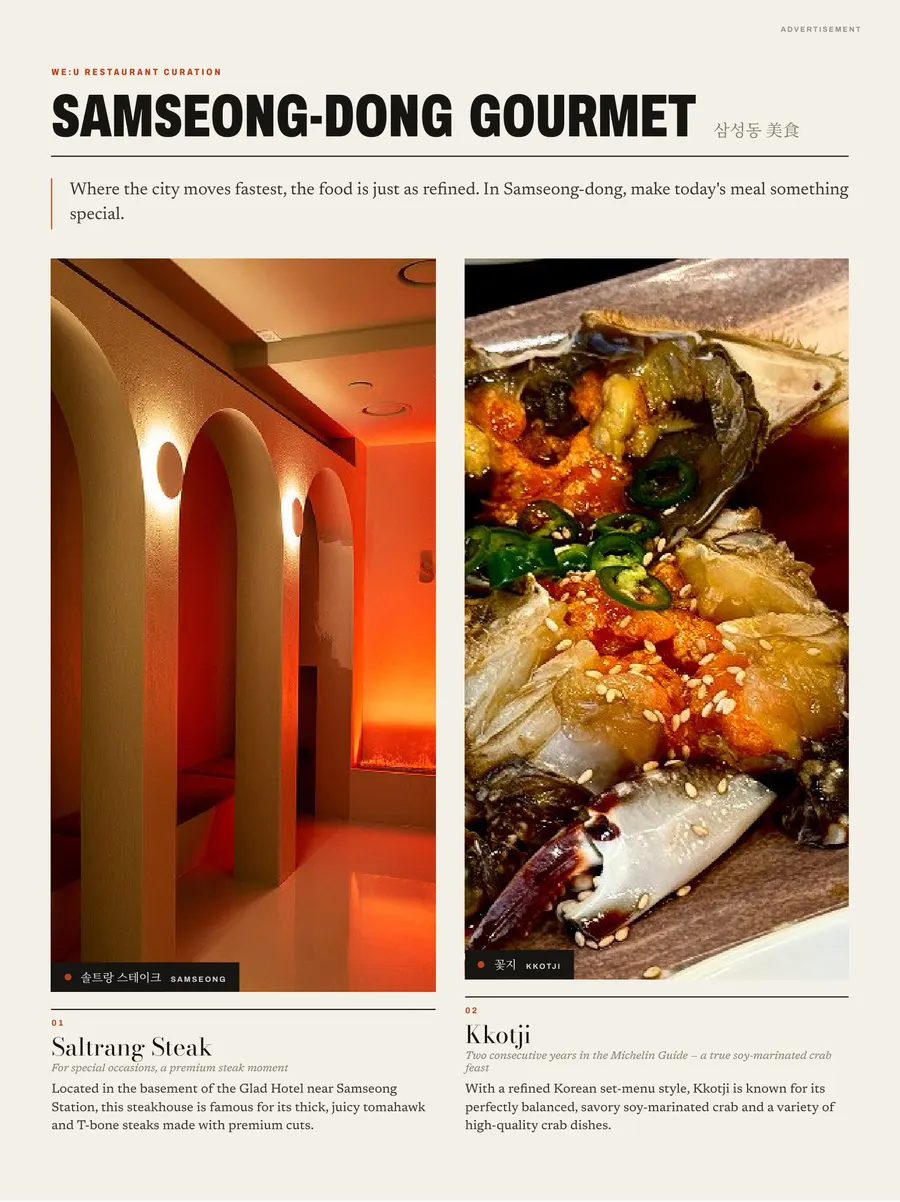
Restaurant curation · Samseong-dong · Brand page, pages 56 to 57
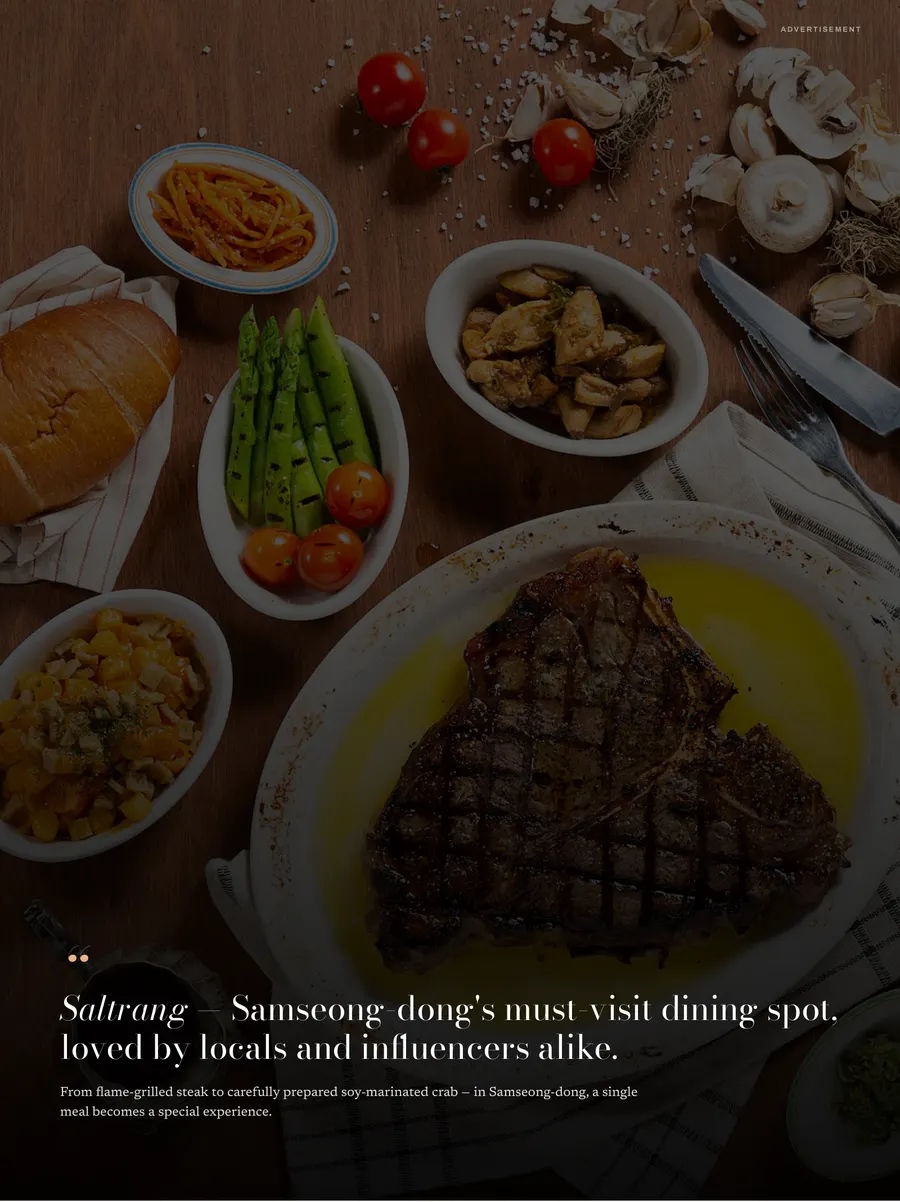
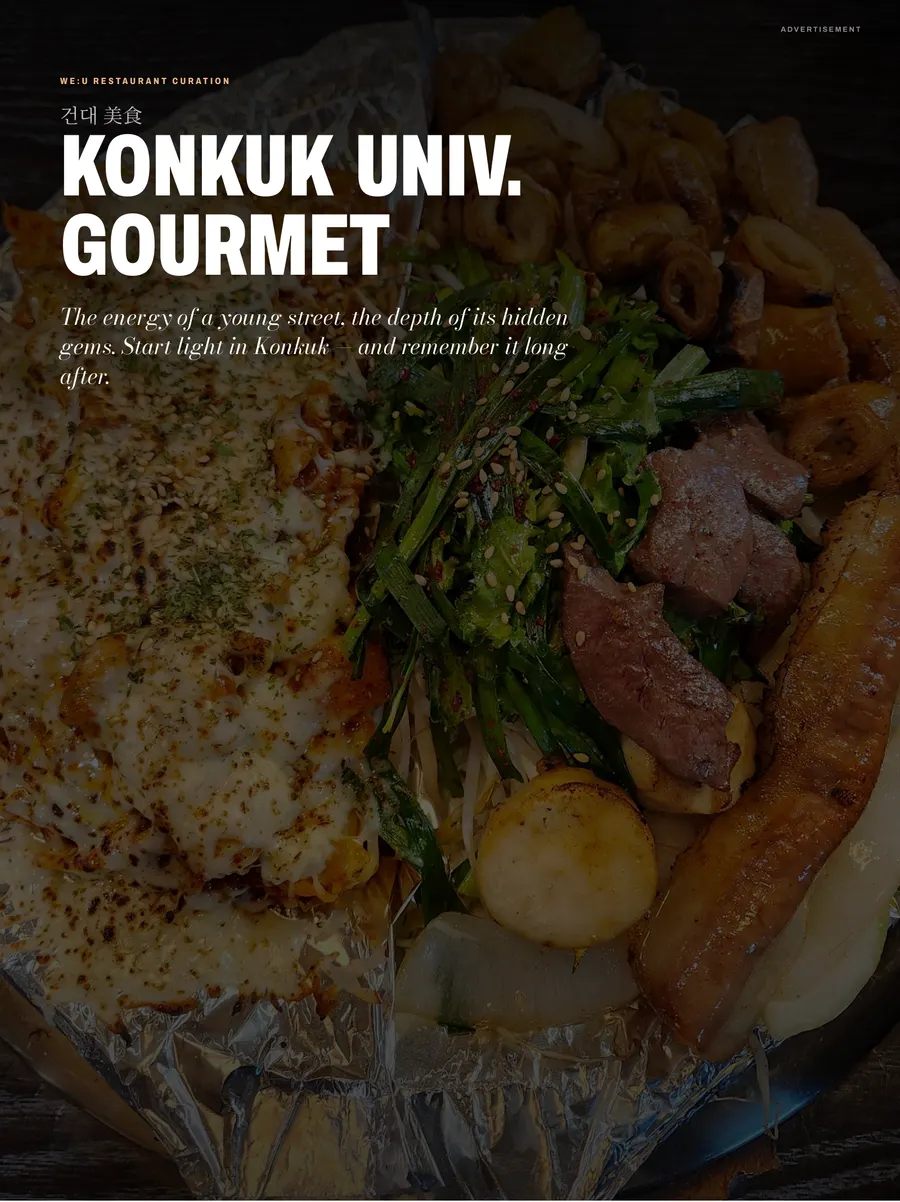
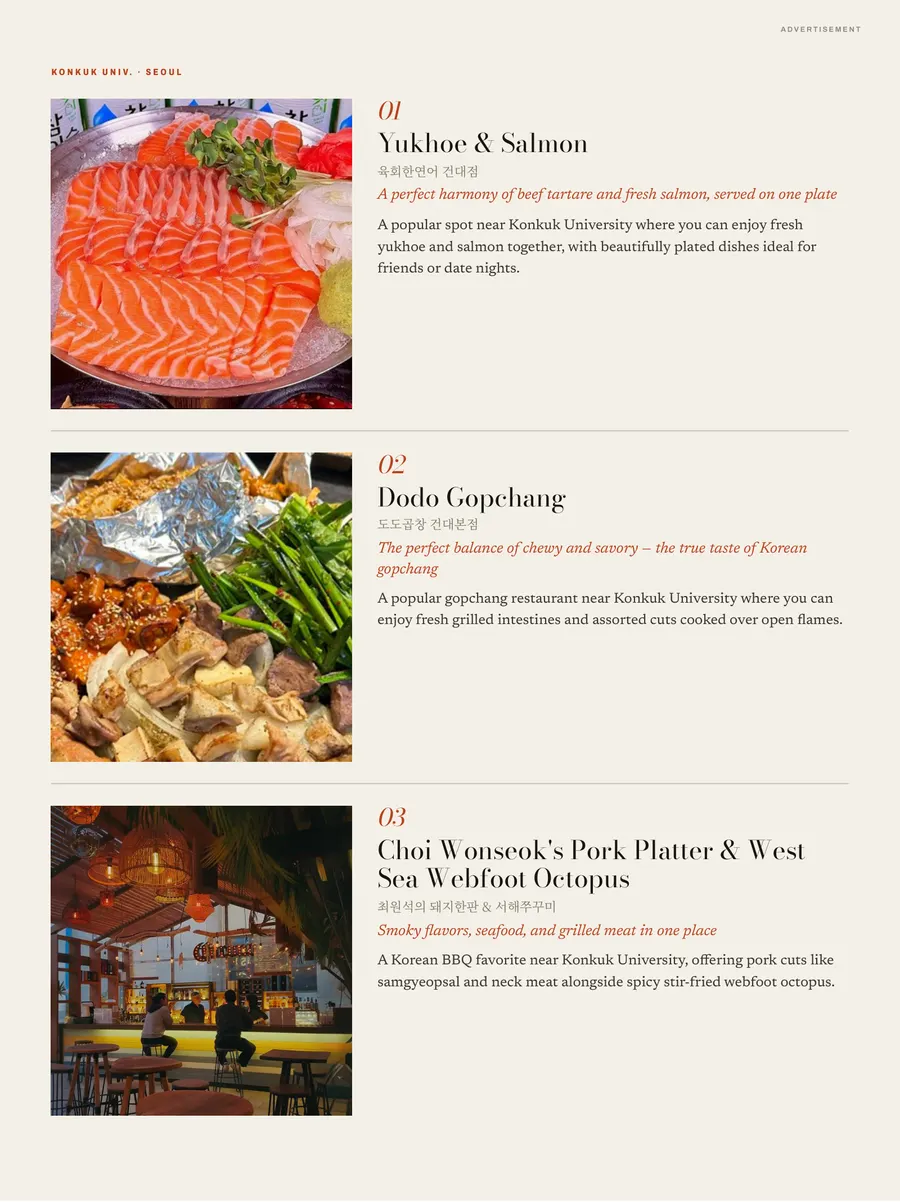
Restaurant curation · Konkuk Univ. · Seoul · Brand page, pages 58 to 59
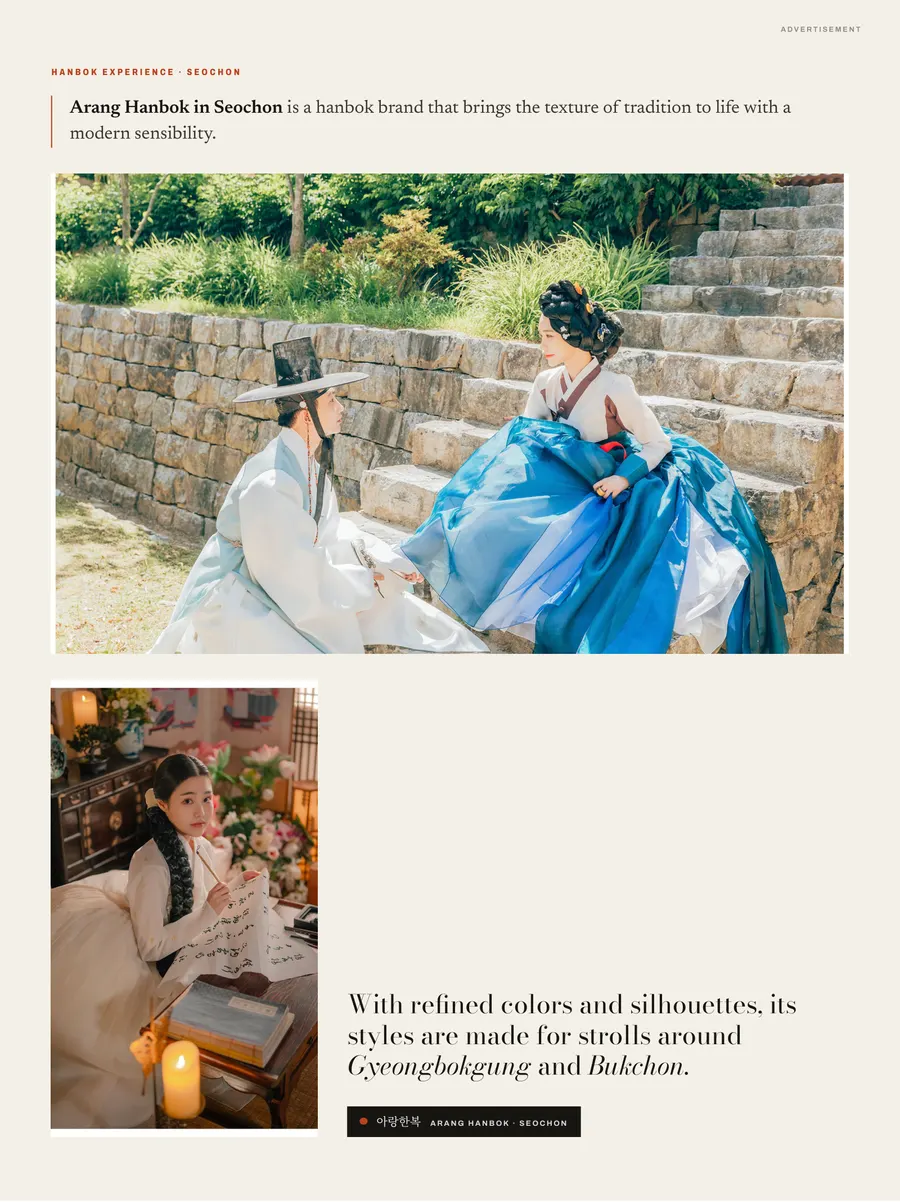
Hanbok experience · Seochon · Brand page, pages 60 to 61
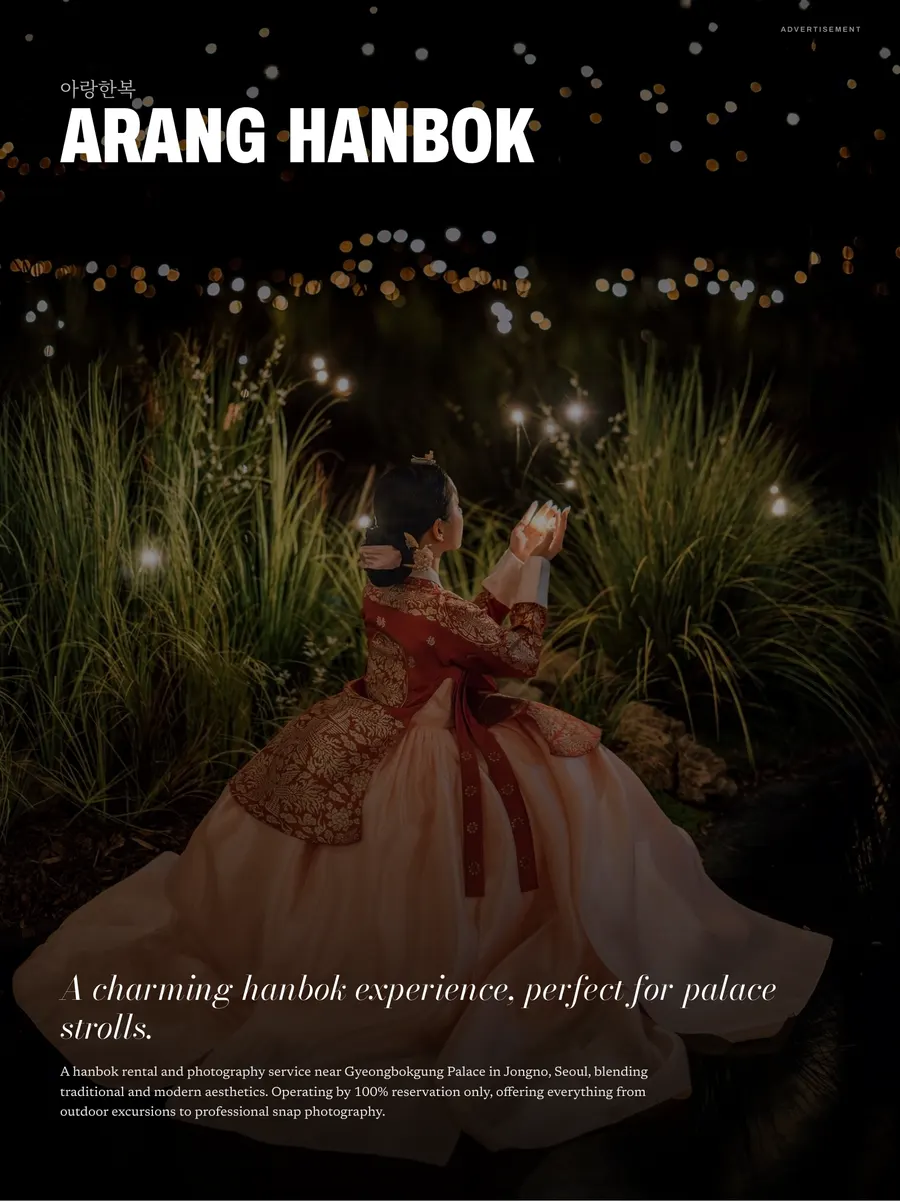
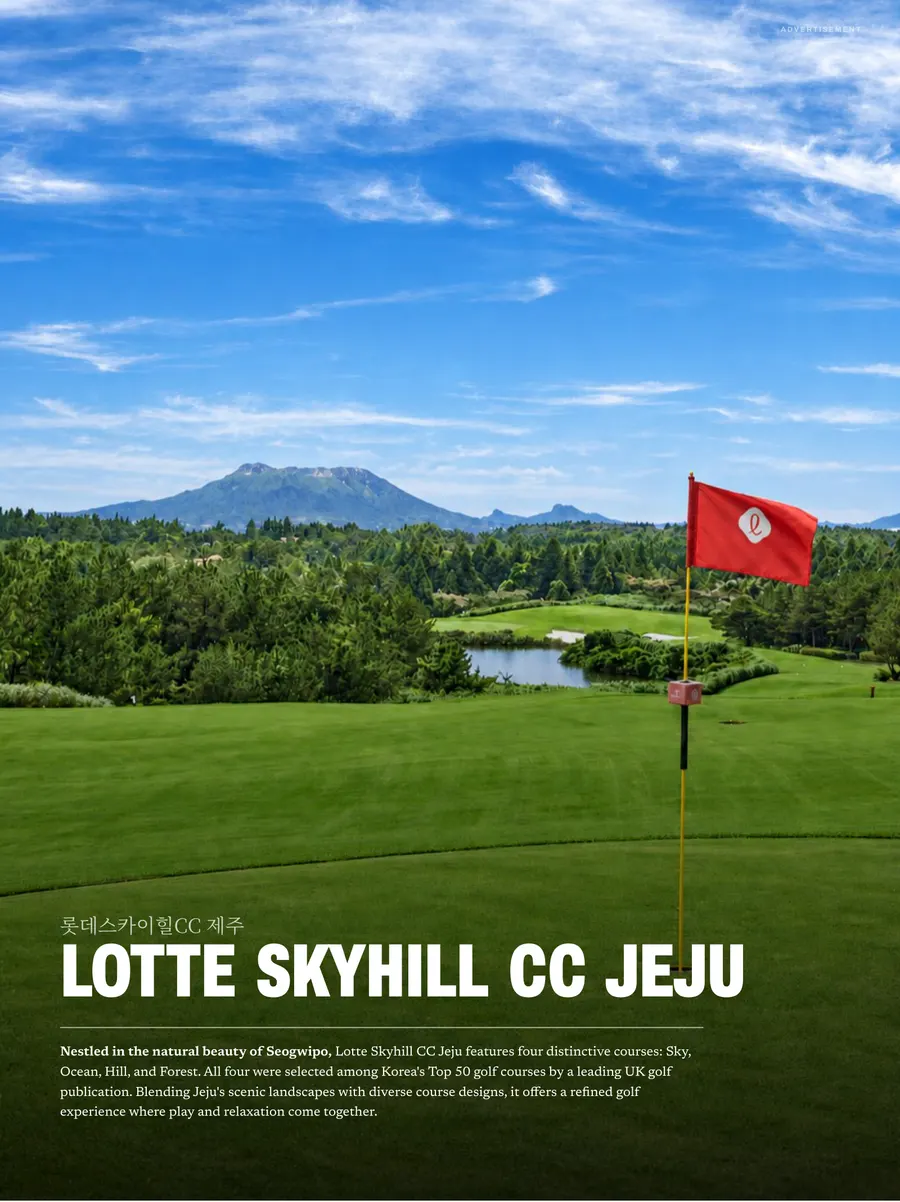
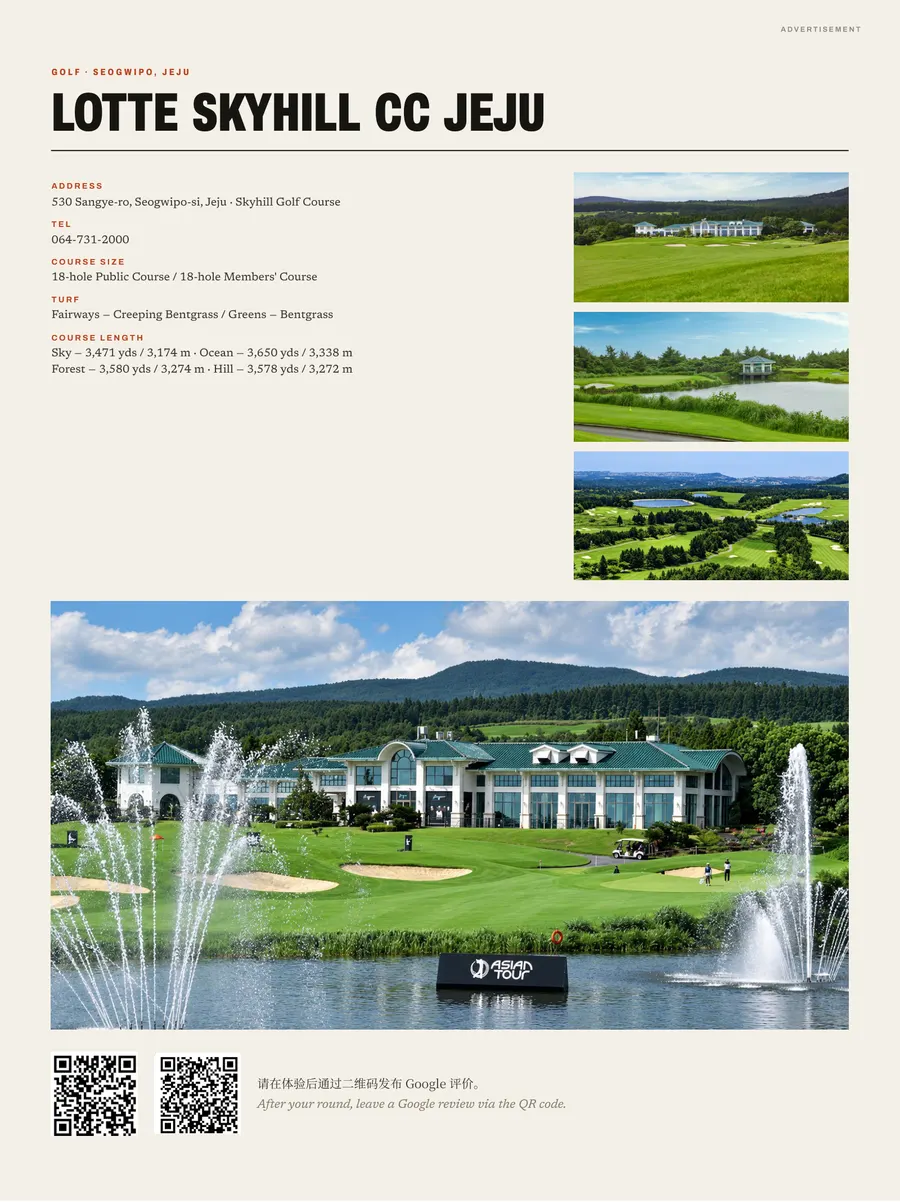
Golf · Seogwipo, Jeju · Brand page, pages 62 to 63
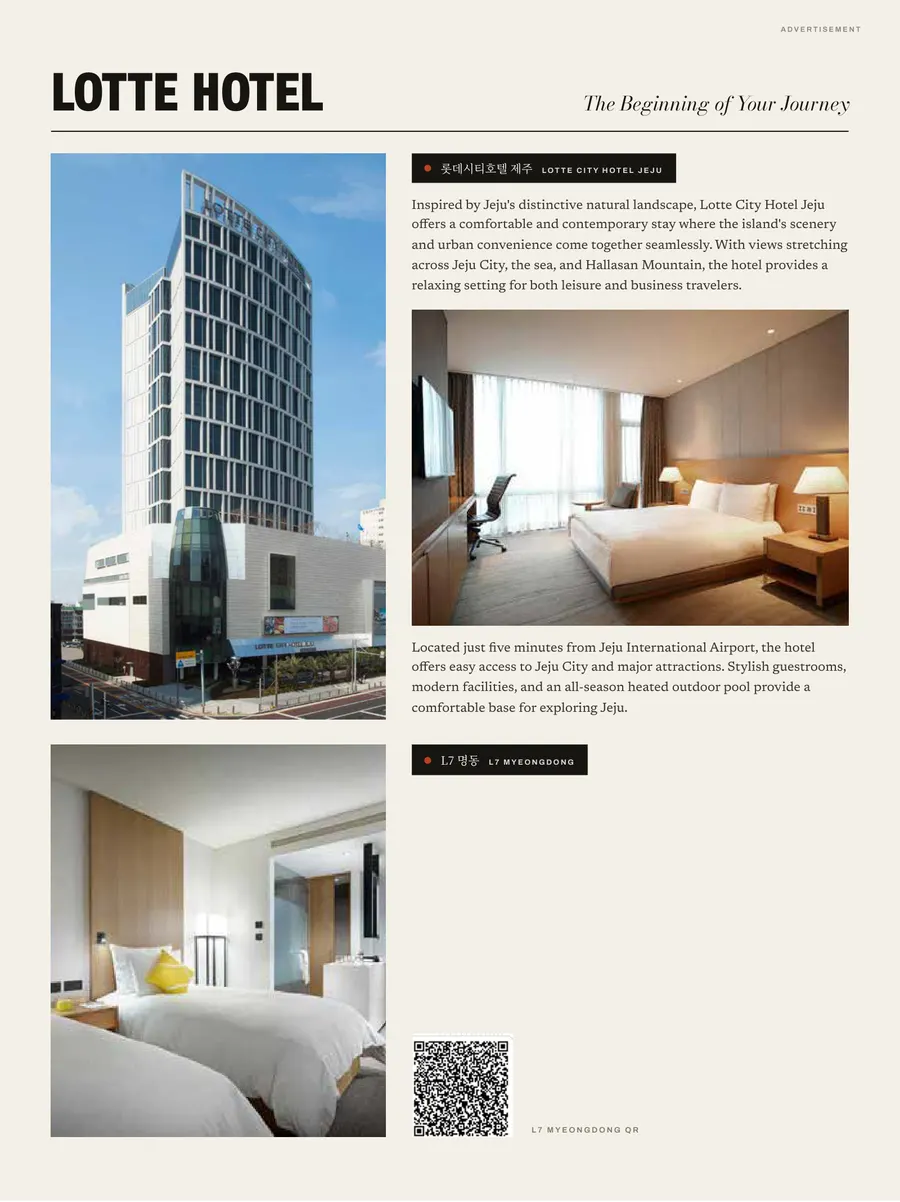
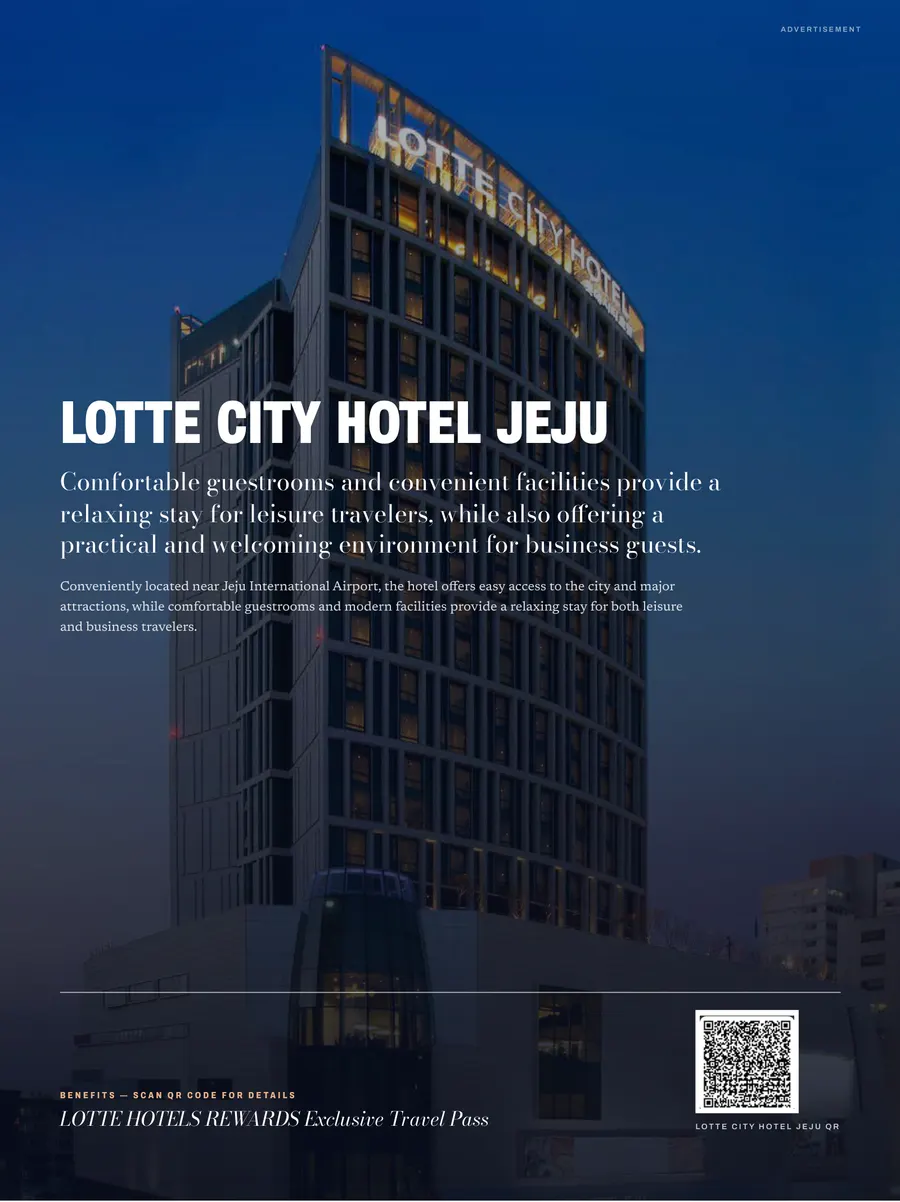
Hotel · Jeju · Brand page, pages 64 to 65
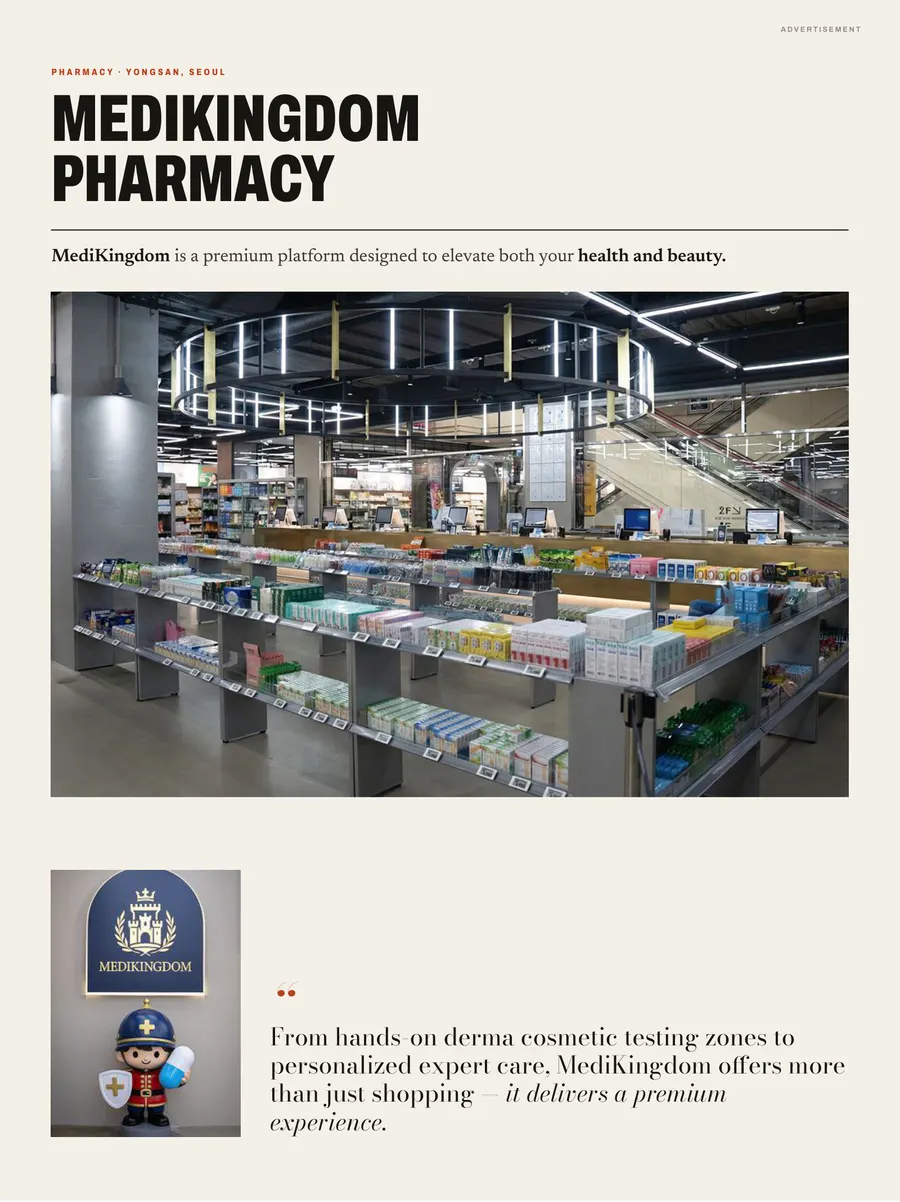
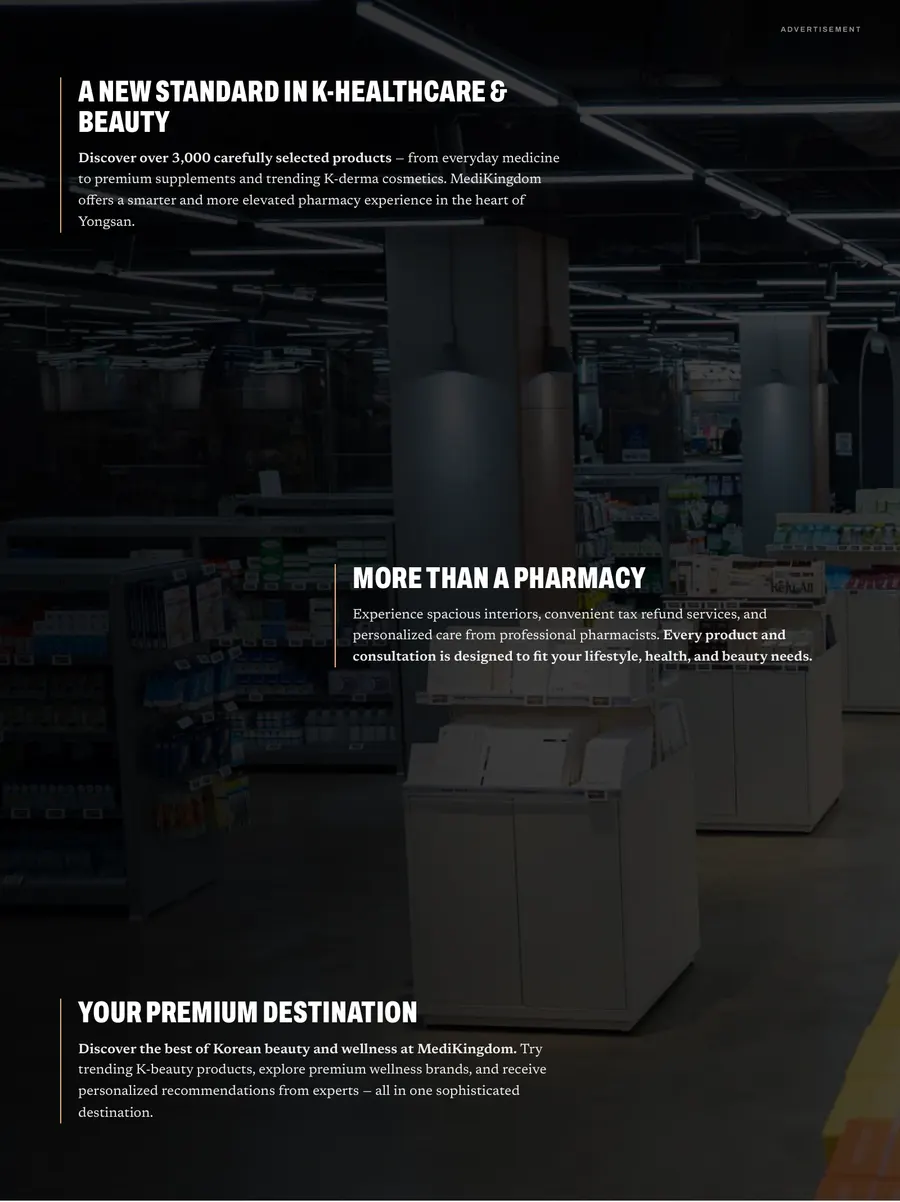
Pharmacy · Yongsan, Seoul · Brand page, pages 66 to 67
Brand page, pages 68 to 69 to 70 to 71